THE JOURNAL
What is the difference between German and Swiss watches?
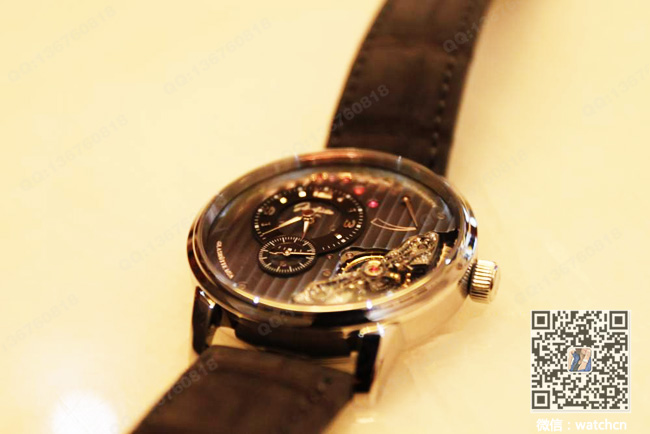
TodaySwiss watchesHold an absolute dominant position in the watchmaking world due to their stable movement performance, precise timekeeping, and the vast number of Swiss brands that have coalesced into a fashion trend. Meanwhile, Germany also boasts a number of exceptional watch brands, such as A. Lange & Söhne, Glashütte Original, and NOMOS, which hold their own esteemed place in horology. So, what exactly are the differences between German and Swiss watches? In truth, the most significant difference lies within the movement.
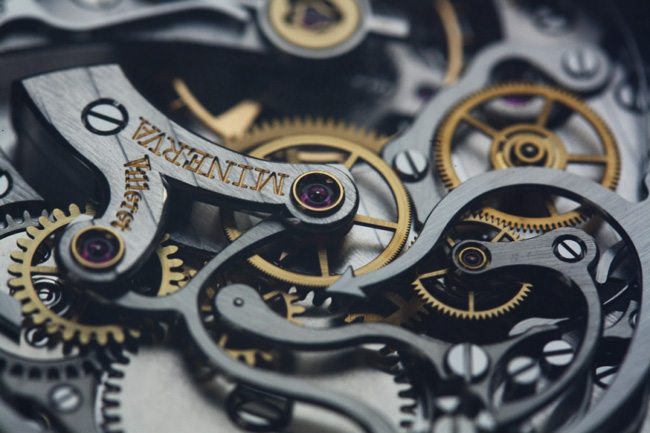
Hand-engraved balance cock
Viewed purely from a functional perspective, the balance cock is a small component that supports the operation of the balance wheel, but for A. Lange & Söhne watches, it is a critically important part. In traditional German watchmaking, the balance cock must be made of German silver and hand-engraved with stunning decorative patterns. The varying depths and diverse variations of these engravings are truly captivating.
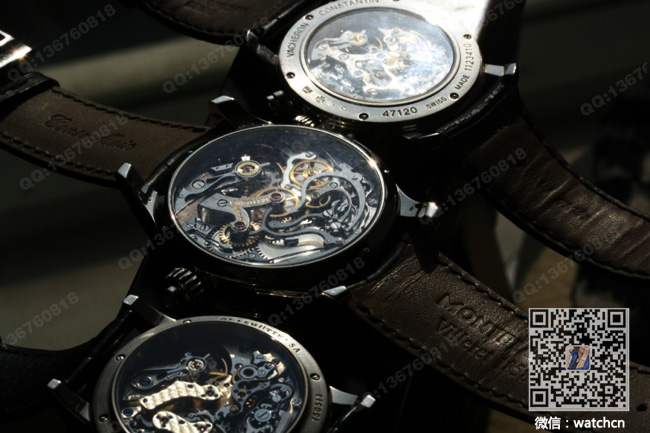
German silver 3/4 bridge
In German watchmaking craftsmanship, the 3/4 bridge is also of great importance, originating from A. Lange & Söhne in 1864. Among them, A. Lange & Söhne and Glashütte utilize this to the greatest extent, serving as true exemplars in this regard. The primary function of the 3/4 bridge is to balance the gear train in order to enhance the stability performance of the movement. Furthermore, the 3/4 bridge crafted from German silver develops a beautiful and alluring golden patina over time due to the nature of the material, thus requiring no surface treatments such as electroplating.
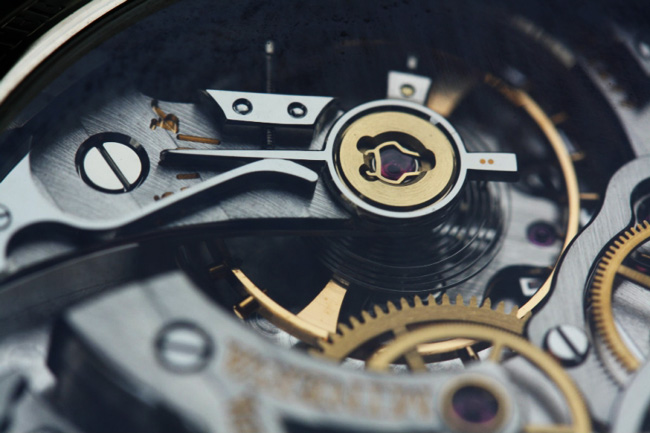
Swan-neck fine adjustment
German watch movements share a common characteristic, which is the swan-neck regulator. Its purpose is for the precise adjustment of timing rates, and the regulator is primarily composed of a steel spring resembling a swan's neck, an index pointer, and a regulating screw. When the steel spring exerts pressure against the index pointer, the regulating screw is actuated. Highly skilled watchmakers utilise this to make minute adjustments at an almost infinitely small rate.
Style and characteristics of German watches
Most people know very little about German watches, which is also related to their rather indifferent attitude towards marketing and promotion. Compared to Swiss watches, which emphasise design characteristics, the German people have forged a unique yet distinct path in watchmaking driven by their pragmatism and rigorous approach.
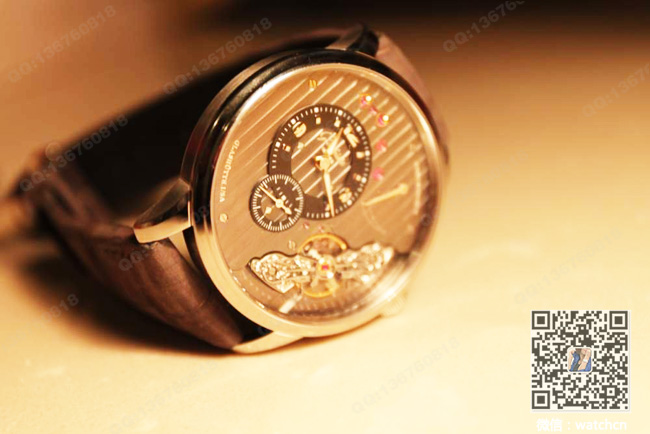
Distinction in style
The dials of German watches are generally clean, rarely employing patterned engraving, and the majority of German watches also seldom use techniques such as gemstone-setting or enamel. Among the German watch brands we are familiar with, Glashütte Original has designed a few enamel or diamond-set models, and A. Lange & Söhne has also introduced a diamond-set entry-level timepiece. While it is certainly pretty, personally, one might feel this departs slightly from the true A. Lange & Söhne ethos.
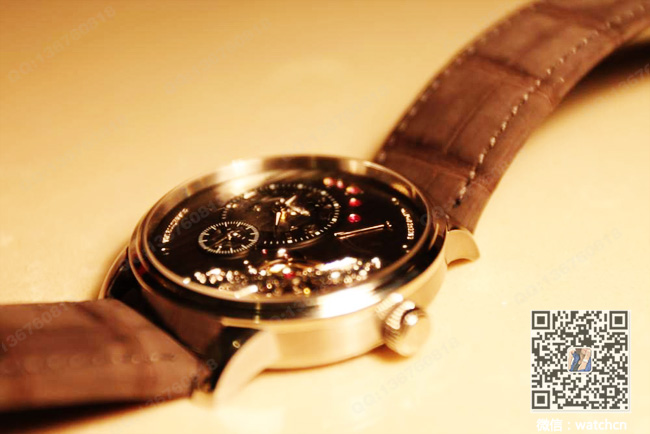
The overall case design in German watchmaking is also clean and concise, with the case flanks mostly cut at right angles and possessing almost no curvature. In contrast, Swiss and French watchmaking more frequently adopt curved side designs, appearing much softer and more fluid.
![[N Factory Perfect Edition] Rolex Submariner series mechanical watch 116613LN](/images/pic/big/3940.jpg)
![[VS Factory Perfect Edition] Panerai Modern LUMINOR 1950 Series PAM00441 Watch](/images/pic/big/3873.jpg)
![[Noob Factory V7 Edition] Rolex Submariner watch 116610LN Black Sub](/images/pic/big/4977.jpg)
![[Noob Factory V7 Version] Rolex Submariner Watch 116610LV Kermit Submariner](/images/pic/big/4976.jpg)