THE JOURNAL
Appreciation of Cartier's Classic Yellow Gold Decorative Watches
The charm of a two-tone watch lies in its ability to showcase both taste and standing, and while many watch manufactures and brands choose to feature the tourbillon as a "trendy" style when creating timepieces, sothe Calibre de Cartier watchwas born. Featuring a 42 mm case crafted from stainless steel and 18k rose gold, it is equipped with the Cartier 1904-PS MC automatic mechanical movement. The silvered dial has a subtle pearlescent finish, complemented by a unique combination of Roman numeral hour markers and geometric luminescent hour markers, making it a distinctive choice amongst two-tone watches. Let us take a closer look.
The twin of the steel watch
In the watchmaking industry, whenever we speak of "trends", quotation marks are almost always inevitable. For instance, in recent years the tourbillon has been all the rage; whenever watch manufactures run out of ideas, they make a tourbillon; whenever watch journalists run out of topics, they write about a tourbillon; and whenever customers are unimpressed by other watches, they buy a tourbillon. However, judging by production volume, tourbillon watches actually account for a very small share of the overall watch market. While they are trendy, the products themselves are by no means mass-market.
Any product that becomes popular is either a new phenomenon that fades quickly after a brief moment of glory, or a classic that never goes out of style. Although I am not an expert in watch history, I can determine that two-tone watches do not belong to the former category. Based on my personal observations at auctions, the earliest two-tone watches can be traced back to the nineteen-forties, a period when men's watches were gradually taking shape and the contemporary characteristics of wristwatches began to emerge. At that time, a large number of manufacturers produced two-tone watches, among which the most influential and prolific was Rolex with its ref.2940 small seconds watches and ref.3372 large seconds watches. They featured Rolex's iconic 'Oyster' case and 'bubble back' case back, combined with the two-tone design later named 'Rolesor' by the brand; it is fair to say that it would have been difficult for them not to become classics. It is highly likely that it was precisely because of Rolex's efforts that the two-tone watch has been able to endure.
According to modern cognitive habits, it is very easy for us to presuppose that two-tone watches are simply the product of combining steel and gold, assuming they must have appeared quite late. In reality, however, two-tone watches and steel watches emerged almost back-to-back. Both are junior to gold watches, and even if they share a bloodline, they are merely cousins rather than parent and child. Stainless steel entered the historical stage at the beginning of the last century, only obtaining its patent in 1916 and entering batch production, though waiting a few more years before being used to craft watches. Some have called stainless steel the greatest invention of the 20 century, as it meant Europeans no longer had to eat with their bare hands even if they could not afford silver cutlery—an impact far outstripping today's touchscreen phones, Android systems, or motion-control games.
The cocktail theory
From the 30s onwards, stainless steel began to enter the watchmaking sphere—to be precise, the manufacture of wristwatches, whilst pocket watches were permanently sealed away in the memory of yellow gold. The transformation that stainless steel brought to watches was, much like today's high-tech ceramics, slow and steady, involving a gradual process of adaptation. Compared to yellow gold, which boasts thousands of years of application history, stainless steel was an absolute newcomer born out of a rapidly developing industrial society. Lacking the opulence and grandeur of nobility, it substituted the simplicity, high yield, and affordability of an industrial product. Yet people immersed in that very same industrialisation process did not shun it; on the other hand, they highly praised this novel material. The tremendous advantages in price and output ultimately completely shifted aesthetic values, with stainless steel superseding yellow gold as the material of choice for watchmaking.
Aside from purely stainless steel timepieces, designs pairing stainless steel with yellow gold also won widespread praise. At the time, the fashion world had no concept of "assemblage", nor even the slightest hint of it, so one can certainly not argue that watches were influenced by fashion. Yet the rise in popularity of two-tone watches was not entirely without precedent. A beverage that rapidly gained traction in social circles was seen as having an intrinsic link to the popularity of two-tone watches: the cocktail.
Literally understood, a cocktail means the tail of a cock; when horses had their tails docked to make them look like a rooster's upturned tail, the word "cocktail" also came to imply something unthoroughbred. Mixed drinks known as cocktails derived their name from this. Before the 20s of the 20 century, the term cocktail denoted something debased through the adulteration of pure substances with impurities—hardly a term of praise. From the 20s onwards, however, the situation underwent a dramatic shift as people began to appreciate processed goods, viewing artificial creations that incorporated other substances into natural materials as possessing a greater sense of fashion. This mindset drove the popularity of artificial pearls, cosmetics, and cocktails, whilst understanding and appreciation for two-tone watches rapidly surged thereafter.
The allure of hard cash
As previously mentioned, two-tone watches appeared over half a century ago, and to this day remain one of the most sought-after categories on the market. Although various advanced materials have continually emerged in recent years, two-tone designs have only grown in number, displaying particularly vibrant activity within the Chinese market.
Generally speaking, choices involving two-tone models are usually popular classics from renowned brands. That is to say, if a collection still holds untapped potential after the launch of its stainless steel version, a two-tone variant will be created to bridge the market gap left by the price difference between the stainless steel models and the solid gold series. Without naming names, readers can likely guess that the company most adept at executing this seemingly effortless technique is none other than Rolex. The same design, the same movement, and without the addition of any complications, simply introducing precious metal materials naturally elevates the product tier, yet remains far more affordable than a solid gold watch.
I have noticed that neither English nor French possesses a direct equivalent for two-tone watches. In other words, this descriptor, distinct from a gold and steel watch, is uniquely coined by Chinese speakers. Other culturally specific terms, such as gold-silver run featuring alternating yellow gold and stainless steel, or steel king for models with white gold bezels, all align with the principles of fidelity, fluency, and elegance. Two-tone designs emphasise gold rather than steel. Even when used in minimal quantities, a two-tone watch leans closer to a solid gold timepiece in terms of aesthetics and connotation, offering a value far surpassing that of an ordinary steel watch. This is arguably the primary reason for their popularity across the Chinese-speaking world.
Counting them up, the two-tone watches commonly found on the market still hail from the usual brands: Omega, Rolex, Cartier, Longines, Tudor, alongside recent releases from TAG Heuer and Raymond Weil. All of these pieces feature automatic winding, complications no more complex than an annual calendar, and generally retail below 10 ten thousand. They pair well with smart-casual attire and, while perhaps not exclusively crafted for the Chinese market, are sure to captivate Chinese buyers. If you are still hesitating over your choice of a daily wear watch, it is worth checking out whether there is a model that catches your eye.
Having seen this far, I would like to recommend a popular Cartier watch to everyone. If you wish to consult for more details, please add WeChat.
Cartier Ballon Bleu medium model watch W6900456
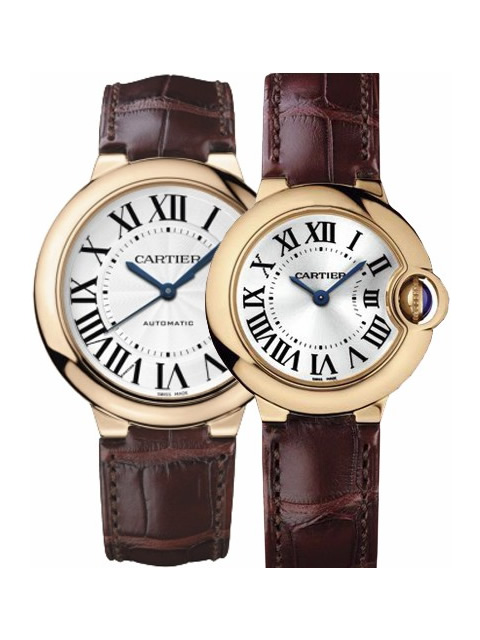
Review:
◆ Cartier Ballon Bleu series W6900456 model watch, rose gold-plated case, sapphire crystal, exquisite craftsmanship.
◆ Silver-plated pearlescent guilloché lacquered dial, Roman numeral hour markers, alligator strap, paired with a rose gold folding clasp; 36MM diameter, very suitable for a woman's wrist.
◆ Features a replica ETA2671 movement, providing stable and accurate timekeeping to meet your daily needs;
◆ Water resistance reaches 30 metres, meeting daily water resistance requirements.
Summary: The above is the Cartier watch that blends impeccable performance with unique design, creating a model that embodies the highest realm of high watchmaking art. The Cartier watch recommended to everyone is exquisitely crafted with guaranteed quality. Friends who wish to purchase can add WeChat for consultation.
You might also like:
How to wear a Cartier watch? Cartier watch wearing methods
How is the Cartier watch w6900651?
How is the Cartier Ballon Bleu series?
Is the brand awareness of Cartier watches high?
How much does Cartier watch maintenance cost?
![[N Factory Perfect Edition] Rolex Submariner series mechanical watch 116613LN](/images/pic/big/3940.jpg)
![[VS Factory Perfect Edition] Panerai Modern LUMINOR 1950 Series PAM00441 Watch](/images/pic/big/3873.jpg)
![[Noob Factory V7 Edition] Rolex Submariner watch 116610LN Black Sub](/images/pic/big/4977.jpg)
![[Noob Factory V7 Version] Rolex Submariner Watch 116610LV Kermit Submariner](/images/pic/big/4976.jpg)