THE JOURNAL
How can you make a replica watch keep time more accurately?
Replica watchesThe timekeeping is constantly changing. Relative to a specific mainspring tension, a fixed position, and a certain temperature, it may be temporarily accurate, but under different conditions, it will change immediately. In other words, even if you calibrate a watch to be perfectly accurate to the second, you will find it will not stay that way; precision is always fluctuating in the moment. Moreover, there are many other factors that affect the precision of a replica watch; the error we observe in a watch is only the actual running error and the average error over a unit of time.
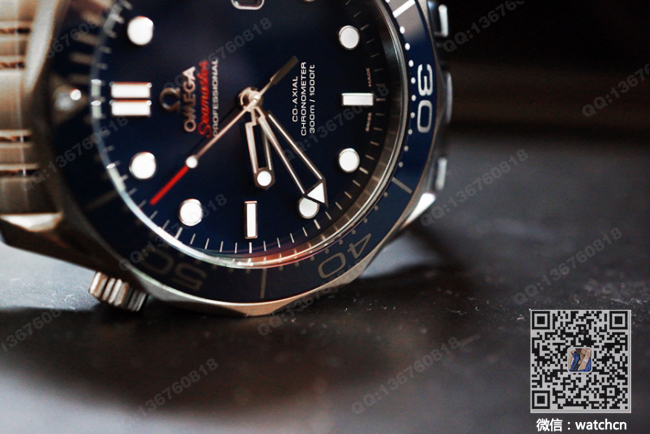
A watch has the best timekeeping precision when the mainspring is fully wound.
To keep your watch accurate, you must wind the mainspring as fully as possible, which is even more important for automatic watches. This is because the degree to which an automatic watch mainspring is tensioned is directly related to your wearing time and physical activity, provided that sufficient physical movement is maintained.
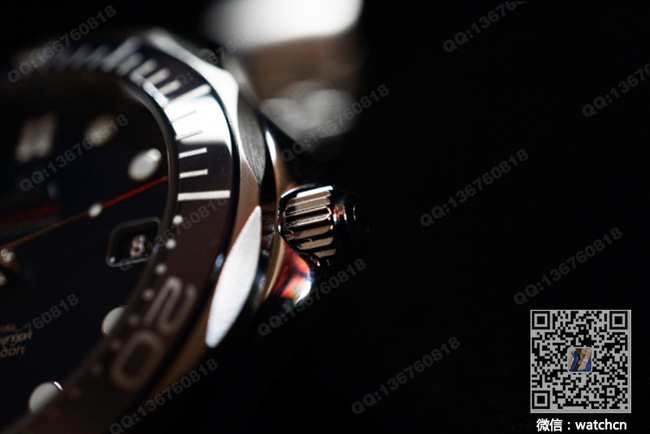
A watch has different timekeeping precision in different positions:
This is what we call positional error in watches. Better watches are tested at the factory across three temperatures and five positions. The five positions are: dial up, dial down, crown down (3 o'clock down), crown left (12 o'clock down), and crown up (9 o'clock down). Only the crown right position (6 o'clock down) is uncommon (unless you wear the watch on the inside of your wrist or on your right hand). According to statistics, most people use the dial-up position for about 35% of the day, crown left for 30%, crown down for 25%, and other positions for 10%. Therefore, by exploiting the different precision errors of a watch in various positions, you can correct its tendency to run fast or slow.
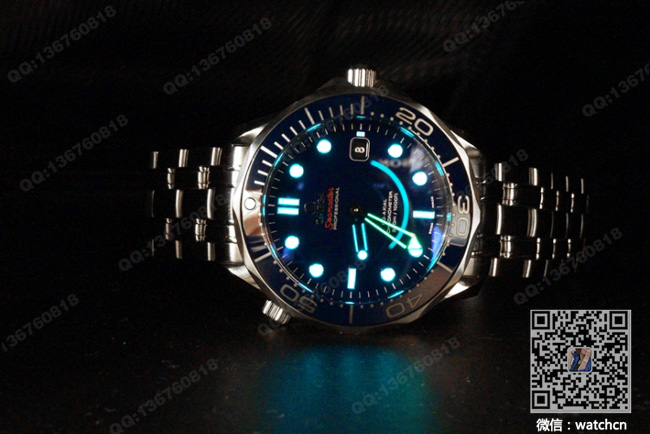
First, perform an observation test and record it:
The testing method is simple: first, fully wind the watch, then synchronise the hour, minute, and second hands with a standard time source. Place the watch in a flat position and let it run for 24 hours, then compare the error against the standard time and record it. Repeat this process sequentially, testing the running error for the dial-down, crown-down, crown-left, and crown-up positions, and record the results.
For example: the static test results are: dial-up +20 seconds/day, dial-down +20 seconds/day, crown-down -5 seconds/day, crown-left +25 seconds/day, crown-up +10 seconds/day, resulting in an actual daily wearing error of +15 seconds/day.
Choose the position to place the watch at night to correct the error:
Taking the situation in the example above, it is clear that you should place the watch with the crown facing down at night to help reduce the cumulative timekeeping error. Only by having an accurate understanding of the causes of your watch's errors and its specific characteristics can it serve you better.
![[N Factory Perfect Edition] Rolex Submariner series mechanical watch 116613LN](/images/pic/big/3940.jpg)
![[VS Factory Perfect Edition] Panerai Modern LUMINOR 1950 Series PAM00441 Watch](/images/pic/big/3873.jpg)
![[Noob Factory V7 Edition] Rolex Submariner watch 116610LN Black Sub](/images/pic/big/4977.jpg)
![[Noob Factory V7 Version] Rolex Submariner Watch 116610LV Kermit Submariner](/images/pic/big/4976.jpg)