THE JOURNAL
Why do mechanical watches experience accuracy variations? The causes of timekeeping deviations
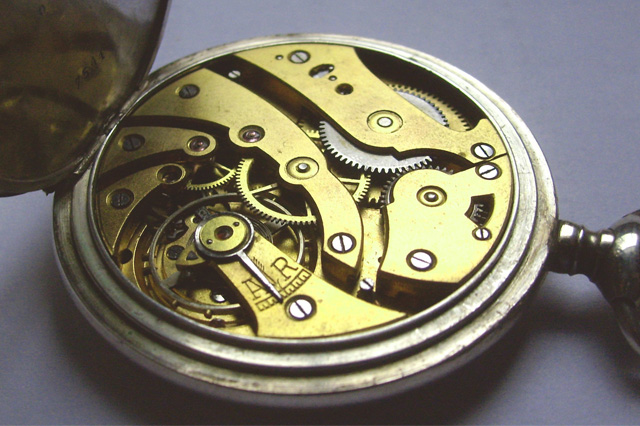
Time is measured by the succession of identical, repeating processes. When a watch measures time, we compare time against a known, periodically repeating process.Mechanical watchThis means utilizing a mechanical oscillator composed of a balance spring as the time base. Why do mechanical watches often have errors? Because it depends on the stability of the oscillation period of the balance spring. Below, let's discuss why mechanical watches have errors and what the causes of these errors are.
Causes of timekeeping errors in mechanical watches:
(1) Influence of amplitude
The tightness of the watch mainspring directly affects the amplitude of the balance wheel inside the watch, thereby impacting the watch's performance. This is known as "isochronism", which refers to the concept that the amplitude of an oscillating object does not affect its oscillation period. However, the balance spring system in a watch does not oscillate freely. It constantly experiences impacts and collisions with the escapement components, resulting in a combined "forced + free" oscillation state, which is inevitably influenced by the escapement system. The magnitude of the impulse torque determines the amplitude and also the duration of their contact; this duration is, of course, better the shorter it is.
(2) Influence of positional changes
The primary positional changes are between horizontal and vertical planes. The horizontal plane has 2 vertical positions, counting only 3 crown-right position which does not occur during normal wear, making a total of 5 positions. Positional changes mainly cause alterations in the contact surface of the balance staff pivots, increasing friction. Furthermore, the imbalance of the balance wheel becomes more pronounced and prominent under the influence of gravity, with additional torque acting on the rapidly oscillating balance wheel. The gravitational pull on the hairspring also causes the oscillation period of the watch's balance spring system to be affected to varying degrees in each position.
(3) Influence of the regulator index
We all know that most watches have a regulator index, which serves to facilitate the adjustment of the watch's timekeeping accuracy. However, because there is a gap between the regulator pins and the hairspring, also known as "play", its existence greatly disrupts the watch's isochronism and increases positional errors.
(4) Influence of temperature changes
Changes in temperature cause changes in the geometric dimensions of the balance wheel and hairspring. Every minute change in these critical components directly affects the oscillation period. Temperature also alters the viscosity of the watch oil, thereby changing the torque transmission and oscillation of the watch gear train.

(5) Influence of magnetic fields
Most watch movement parts are made of steel. Since nickel-based hairsprings are weakly magnetic, they can become magnetized. When a watch is subjected to an external magnetic field or when its parts have already been magnetized, the oscillation period of the balance wheel will be heavily disrupted by magnetic forces, causing the watch to run very fast.
(6) Other factors
Of course, in addition to magnetic fields and temperature, there are also influences from shocks, vibrations, and manufacturing tolerances of movement parts. Even insufficient sealing of the watch case, moisture, and atmospheric pressure can directly affect the watch's timekeeping.
In short, if we want high accuracy from a watch, we must keep the mainspring relatively fully wound. Generally, a watch runs better in horizontal positions than in vertical ones. The case seal should be good, and the watch should be kept away from magnetic fields and water, with regular servicing and oiling. Typically, watches with larger movements have better accuracy than those with smaller ones.
Related reading:
Internal structure of an automatic mechanical watch
How should a mechanical watch be maintained?
Specific methods for choosing a mechanical watch
What is the difference between a mechanical watch and a quartz watch?
What causes inaccurate timekeeping in mechanical watches and how to solve it?
![[N Factory Perfect Edition] Rolex Submariner series mechanical watch 116613LN](/images/pic/big/3940.jpg)
![[VS Factory Perfect Edition] Panerai Modern LUMINOR 1950 Series PAM00441 Watch](/images/pic/big/3873.jpg)
![[Noob Factory V7 Edition] Rolex Submariner watch 116610LN Black Sub](/images/pic/big/4977.jpg)
![[Noob Factory V7 Version] Rolex Submariner Watch 116610LV Kermit Submariner](/images/pic/big/4976.jpg)