THE JOURNAL
A simple method to check the sensitivity of a watch
(1) Gently shake a watch that has stopped and is not wound. Observe the movement of the seconds hand: if the seconds hand stops within a very short time, it indicates that the watch can fully exhaust its power reserve once wound (meaning the mainspring has no residual torque), signifying high sensitivity. If the seconds hand continues to move for a long time, it indicates that the watch cannot fully exhaust its power reserve (meaning the mainspring still holds torque), suggesting low sensitivity or a fault in the movement.
(2) For a watch that has stopped and is not wound, slowly turn the crown and observe when the seconds hand starts moving: the fewer turns required to start the seconds hand, the higher the sensitivity of the watch; conversely, the sensitivity is low or there is another fault in the movement. Note, however, that high-beat watches require more winding to start due to the greater stiffness of the hairspring compared to traditional frequency (18000vibrations per hour) movements. A highly sensitive watch will run for a longer duration after being fully wound.
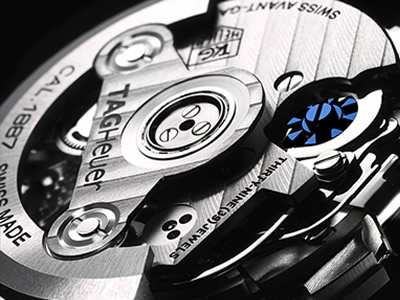
TAG Heuer movement
![[N Factory Perfect Edition] Rolex Submariner series mechanical watch 116613LN](/images/pic/big/3940.jpg)
![[VS Factory Perfect Edition] Panerai Modern LUMINOR 1950 Series PAM00441 Watch](/images/pic/big/3873.jpg)
![[Noob Factory V7 Edition] Rolex Submariner watch 116610LN Black Sub](/images/pic/big/4977.jpg)
![[Noob Factory V7 Version] Rolex Submariner Watch 116610LV Kermit Submariner](/images/pic/big/4976.jpg)