THE JOURNAL
How to tell genuine Swiss watches from counterfeits?
Regarding the authentication of Swiss watches, the cheapest genuine Swiss watch domestically generally costs no less than five figures. If you find many Swiss watches priced at a few hundred or a few thousand on watch websites, do not believe they are authentic. They are undoubtedly counterfeits—that is, high-grade replica watches.
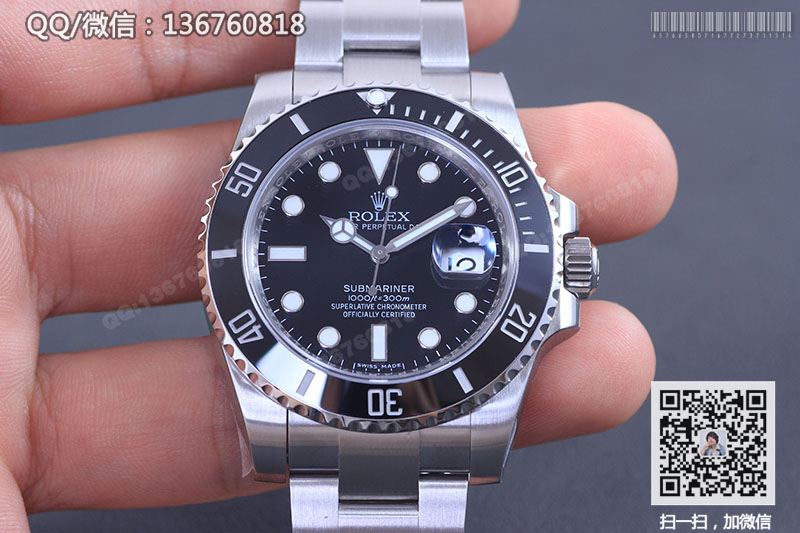
Methods to authenticate Swiss watches
Swiss watch authentication: appearance
Hands: Swiss watches are characterised by the frequent use of "blued steel" hands. Counterfeit hands often appear pale blue, whereas genuine ones are deep blue. Authentic Swiss hands feature smooth, bright electroplating with regular, delicate shapes (especially the seconds hand), and the luminescence on the hands matches the colour on the dial.
Dial: Dial printing (including minute track markers and English lettering) is crisp, glossy black, and raised. Counterfeits fail to achieve this quality, with printing that is often blurry, dull, and flat.
Case: Swiss watches, particularly solid gold models, bear numerous hallmarks and markings on the case. These hallmarks are stamped very small and clean, whereas replica markings are typically coarse, enlarged, and blurry.
Case back: Examining the case back of a Swiss watch is a straightforward check. The back features engravings including the brand name, case details, case material, model number, and serial number. Engravings on genuine watches are remarkably sharp, deep, finely stroke-drawn, and neat in font; counterfeits feature thick, uneven strokes, poor layout, and smudged markings.
Strap/Bracelet: Next, inspect the strap or bracelet. Counterfeits show poor craftsmanship on the clasp pins and clasp surface finish. For instance, protruding pins look rough, unrounded, and show machining marks; the finish on the clasp lacks lustre, with irregular shapes and bevels, and burrs are present near screw holes. These are typical characteristics of fake Swiss watches.
Swiss watch authentication: price
Price is usually the most intuitive indicator for identifying a luxury watch. Regarding the authentication of Swiss watches, the cheapest authentic Swiss watch domestically usually costs at least five figures. If you spot many Swiss watches priced in the hundreds or low thousands on watch websites, do not believe they are genuine; they are certainly counterfeits—namely high-grade replicas.
Swiss watch authentication: guarantee card
Swiss watches typically come with 2 to 4 guarantee cards (depending on the specific model), which are dark red and credit-card sized. Printed with watch details (model number, serial number, movement calibre) and stamped with the retailer's blue seal, they correspond strictly to the individual watch. Card content covers international guarantees, chronometer certifications, natural diamond certificates, and functional guarantees. High-grade replicas frequently exhibit mismatched numbers, non-corresponding features, or lack the retailer's blue stamp.
Swiss watch authentication: case serial number
Watches carry an original factory serial number, and Swiss watches are no exception, with every number being unique. It is typically found on the case back or behind one of the lugs as an 8-digit number. For automatic mechanical watches, this 8-digit serial number also appears on the edge of the movement mainplate, matching the serial number on the case.
Rolex watch authentication
1, check the case
Examining the case is the hardest part for beginners to master. Whether the case shape has been polished, whether the lug holes match the reference prefix, whether the prefix engraved on the case matches the dial and hands, and so on—all of these require consulting more reference materials, doing more homework, and handling physical pieces. Here I will only discuss the most superficial identification. Replica watches share a common flaw: a single case shape is often used across multiple watch models. For instance, the case of 16234 frequently has 16233 engraved on it, while the case of 16613 has 16610 engraved on it, and so on. Because of the need for mass production, cases that can be shared are not redesigned, thereby reducing costs.
2, check the bracelet
Generally, the craftsmanship of a replica Rolex bracelet is relatively crude, especially on two-tone models where poor finishing along the edges of the gold plating is more obvious. When bent, a genuine two-tone bracelet reveals a relatively thick cross-section with uneven thickness, whereas fakes have a uniform thickness. On a genuine two-tone bracelet, the central gold section is flush with the outer steel sections, feeling relatively smooth to the touch, whereas on fakes, the gold section sits slightly lower than the outer steel, giving a distinct transitional feel when touched. Most replica Rolex watches also lack engravings on the clasp.
3, check the logo
The logo is usually the easiest feature to give away a replica watch, particularly the dial logo. On genuine watches, metallic logos are typically bright and pristine, whereas replica logos have rough and somewhat irregular edges. For painted lettering, authentic dials feature smooth edges without burrs, while replica lettering often shows slight bleeding at the edges alongside inconsistent character depth. This requires a professional eye and can be rather difficult to spot. (Brands such as Longines, Breitling, Omega, and Rolex are frequently targeted for replication).
4, inspecting the crystal
The cyclops magnifier and laser-etched security mark are the easiest features for beginners to master. Early replica magnifiers were largely ineffective, leaving the date as small as before, though modern replicas have mostly overcome this issue. While the laser security mark on replica watches is very easy to spot, finding it on a genuine timepiece is notoriously difficult—it is somewhat manageable on black dials, but certainly no easy task on white dials. This is due to variations in manufacturing processes. When observed through an eyepiece or digital camera, the coronet on a genuine watch is composed of a total of 152 rectangular dots, with the top of the logo containing 7 dots and the open base ring formed of 14 dots. Due to manufacturing limitations, replica watches never match these precise figures. Naturally, when taking possession of a watch, nobody relies on counting tiny dots for authentication.
Authentication of Longines watches
1, external identification
In terms of appearance, the trademark and brand lettering on the dial and case back of a genuine Longines watch are clear and complete; the number of jewels indicated on the dial matches the actual jewel count within the movement; the material indicated on the case back corresponds to the material used for the case; the Longines crystal is clean and clear; the outer edges of the case components have no sharp feel; and the plating is free of bubbles and does not peel off. On counterfeit Longines watches, the trademark and brand lettering on the dial and case back are blurred; the jewel count on the dial does not match the actual movement; the outer edges of the case components are rough, with bubbling or peeling plating, or broken parts.
2, movement identification
Looking at the movement, the bridges or oscillating weight inside a genuine Longines watch are marked with the corresponding trademark lettering; the movement is securely fitted within the case components; and the interior of the movement is clean. Counterfeit Longines movements lack trademark lettering on the bridges or weight, or the lettering is crude, blurred, or crooked, or simply applied with a small copper sticker; the interior of the movement is dirty, sometimes containing copper shavings, hairs, fingerprints, or similar debris.
3, retail price identification
Imported Longines watches maintain price stability over specific periods. For example, Japanese brand watches are generally priced around 2500-3000; Swiss Longines watches are priced from 1000 upwards, with some prestigious watches costing tens of thousands or even hundreds of thousands, such as Rolex, Tudor, Omega, and Piaget. Generally speaking, imported watches priced below the aforementioned thresholds, barring special circumstances, may be suspected as counterfeit or illicitly sourced imports.
4, inspection mark identification
When purchasing a Longines watch, buyers should check the retailer's commodity inspection certificate and verify whether the serial number on the laser security mark matches the numbers listed on the certificate.
5, inspecting craftsmanship
Genuine watches feature smooth and meticulous finishing, whereas replica watches may show no apparent differences at a casual glance, yet exhibit rough detailing upon closer inspection;
![[N Factory Perfect Edition] Rolex Submariner series mechanical watch 116613LN](/images/pic/big/3940.jpg)
![[VS Factory Perfect Edition] Panerai Modern LUMINOR 1950 Series PAM00441 Watch](/images/pic/big/3873.jpg)
![[Noob Factory V7 Edition] Rolex Submariner watch 116610LN Black Sub](/images/pic/big/4977.jpg)
![[Noob Factory V7 Version] Rolex Submariner Watch 116610LV Kermit Submariner](/images/pic/big/4976.jpg)