THE JOURNAL
What to do if water gets into a Swiss watch?
We all know that Swiss watches make up the most luxury watch brands, and when water gets into your beloved watch, you must be very anxious. Let's take a look at the relevant watch knowledge on how to deal with water getting into a Swiss watch!
Phenomena of water ingress in Swiss watches
(1) Condensation appears inside the watch glass, particularly when there are large temperature fluctuations.
(2) Water droplets condense inside the watch glass.
(3) Large water droplets are visible on the watch glass and dial.
Common Misconceptions About Watch Water Resistance
Some friends believe their watches have water resistance of up to 100 metres or even 300 metres, so they wear their cherished timepieces into the bath or sauna. In reality, this approach is completely incorrect because a watch itself is not an absolutely hermetic case. In other words, water resistance does not necessarily mean resistance to water vapour. As we all know, water vapour is mixed into the air, and it stays suspended because water vapour molecules are extremely small. A watch relies on waterproof rubber rings to seal the gap between the case back and the case. When temperature differentials are large, atmospheric pressure can force air laden with substantial moisture into the watch, and moisture also ages the rubber, diminishing its performance and causing it to lose its water-resistant function.
The hazards of water entering a watch
First, as everyone knows, quartz and electronic watches are made up of resistors, capacitors, batteries, and other components. Water itself is a good conductor, and electricity will "flow" in water. If a large amount of water enters, it will short-circuit and burn out the quartz substrate in the short term. If only a small amount enters, there might not be any issues initially, but over time, the water will corrode the circuit board and cause permanent damage. Water ingress in a mechanical watch will oxidise the balance spring, gears, and other components, leading to a loss of accuracy or even rendering it unusable.
If you wear a watch into a sauna or take a hot shower, the high temperature in the sauna and large amounts of water vapour molecules will cause the waterproof rubber gasket inside the watch to lose its water-resistant function due to thermal expansion and contraction. This allows water or steam to enter, deforming watch components and altering the electrical properties of resistors and capacitors, ultimately causing the watch to stop or lose accuracy.
Methods for handling water ingress in Swiss watches
Method 1: For ordinary mechanical watches affected by moisture, you can wrap the watch tightly with several layers of toilet paper or moisture-absorbing flannel, place it near a 40-watt light bulb at a distance of about 15 centimetres, and bake it for about 30 minutes so that the water vapour inside the watch can dissipate. Avoid baking the watch glass close to a fire directly, so as not to deform the watch glass from heat.
Method 2: Wear the watch backwards on your wrist with the crystal facing inward and the case back facing outward; the water vapour will disappear after two hours. If water ingress is severe, it is best to send the watch to a watch shop immediately for servicing to remove moisture from the movement and prevent components from rusting.
Method 3: Put granular silica gel together with the watch that has accumulated water into a sealed container. After a few hours, take the watch out, and all the accumulated water will have disappeared. This method is simple and economical, and causes no damage to the accuracy and lifespan of the watch. Silica gel that has absorbed water multiple times can be dried at 120°C for several hours to regenerate its water-absorbing capacity, allowing it to be reused multiple times.
Note: When not wearing it normally, try not to let the watch get damp so as to avoid leather deformation; placing it near magnetic items will also affect the accuracy of the watch. In addition, whenever a watch has been soaked in water (unless it is a diving watch), it is best to have it checked in a workshop to avoid serious damage to internal movement parts caused by delayed action. Hot and humid weather can easily cause the oil inside the watch to congeal, resulting in running intermittently, running slow, or stopping completely, and will cause the waterproof gasket to harden, reducing the waterproof function. It is particularly noteworthy that seawater contains salt and is corrosive to metal components, so after outdoor activities, the watch case should also be rinsed with fresh water to avoid corrosion.
![[N Factory Perfect Edition] Rolex Submariner series mechanical watch 116613LN](/images/pic/big/3940.jpg)
![[VS Factory Perfect Edition] Panerai Modern LUMINOR 1950 Series PAM00441 Watch](/images/pic/big/3873.jpg)
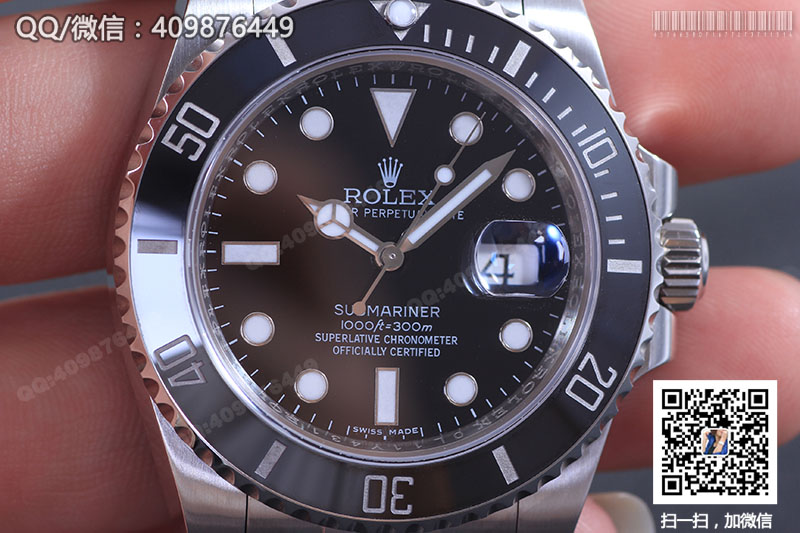
![[Noob Factory V7 Edition] Rolex Submariner watch 116610LN Black Sub](/images/pic/big/4977.jpg)
![[Noob Factory V7 Version] Rolex Submariner Watch 116610LV Kermit Submariner](/images/pic/big/4976.jpg)