THE JOURNAL
10 common watch problems: see how many you have encountered

Nowadays, wearing a watch is not just about checking the time; it is a reflection of personal taste and charm, and a way to decorate oneself. A small watch is full of infinite charm. Although watches have many excellent tastes and practical functions, there are many small problems that cannot be ignored during the wearing process; one careless move might turn your watch into a "hand grenade". Here are ten common problems with wearing watches; see if you have encountered any of them.
1, why does an automatic mechanical watch stop?
An automatic mechanical watch operates through the action of an automatic winding mechanism that tightens the mainspring as the rotor rotates in any direction. As long as it is worn on the wrist, it can generate energy for the rotor through the movement of the arm. Generally, an automatic mechanical watch needs to be worn for more than 8 hours a day to fully replenish the mainspring's energy. If it stops, in addition to movement issues, it is also because people now generally sit in offices, and insufficient physical activity leads to an inability to provide the mainspring with sufficient energy. This situation can be compensated for by manual winding.
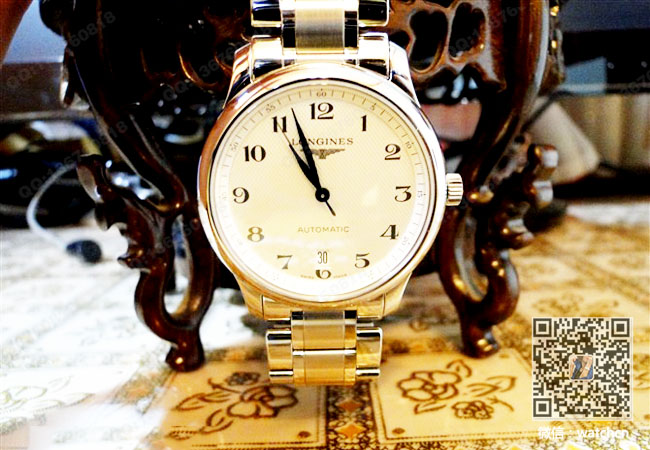
Replica Longines Master Collection automatic mechanical men's watch L2.628.4.78.6
2, do I need to wind an automatic mechanical watch regularly?
An automatic mechanical watch is based on a manual winding watch with an added automatic component, which includes a rotor and automatic wheels. The automatic mechanical watches we sell are generally in a stopped state when they leave the factory. First, customer service needs to help wind the mainspring, and then the customer only needs to wear it for a sufficient amount of time every day. We do not advocate manual winding because manual winding requires the crown to drive many automatic components to rotate together; after many times and a long period, the automatic parts are prone to wear, increasing unnecessary maintenance costs.
3, why does it still let water in even though it is marked as waterproof?
First, it is important to understand that a water-resistant watch is not entirely immune to moisture. Wearing a watch in the shower exposes its water-resistant gaskets to detergents and chemicals that accelerate ageing, causing the water resistance to fail. Extreme temperature variations, such as in saunas or air-conditioned rooms, can also cause moisture to penetrate. If water or moisture enters the watch, take it to a service centre promptly.
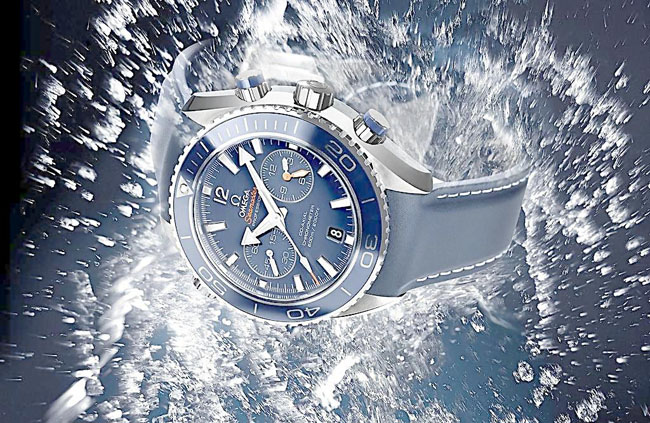
4 Will a watch remain water-resistant after opening the case back?
A watch's water resistance relies on rubber gaskets. Typically, these gaskets are fitted at the glass, case back, and crown junctions with the case to create a seal. Water resistance tests are carried out after replacing a quartz battery or servicing a mechanical watch to ensure it retains good water resistance after the case back has been opened.
5、Quartz watchesHow often should the battery be replaced?
The battery life of a quartz watch generally ranges from 1 to 2 years, depending on the movement and usage. High-end quartz watches usually feature an end-of-life indicator, where the seconds hand steps irregularly at four-second intervals, signalling that a battery change is needed. Failing to replace it promptly may result in battery leakage that damages internal components. If you do not wear the watch regularly, it is advisable to pull out the crown to stop the watch.

6 Can sapphire crystal glass still get scratched?
The sapphire crystal glass used in watches is not natural sapphire; it is produced by heating fine aluminium oxide powder in a high-temperature furnace to form sapphire crystals, which undergo numerous manufacturing processes. Its hardness is second only to diamond, making it about seven times harder than steel. However, this does not mean it cannot be scratched; being highly scratch-resistant does not mean it is scratch-proof.
7 What causes a quartz watch to stop running?
First, check whether the crown has been pulled out, whether the seconds hand is touching the crystal, or whether any of the three hands are interfering with each other. Finally, have a professional check if the battery is depleted.
8 Will an all-steel bracelet develop rust spots or discolouration?
Steel comes in various grades. The main components of stainless steel are nickel and chromium, which are vulnerable to corrosion from strong acids and alkalis. Human sweat contains hydrochloric acid; if sweat and dirt remain on the watch for a long time, rust spots can form on the bracelet and black marks may rub off on the wrist. This occurs when nickel and other elements in stainless steel react with sweat, vinegar, bleach, correction fluid, cosmetics, or other chemicals. A simple remedy is to brush the bracelet gently using a soft toothbrush with mild detergent, then wipe dry with a soft cloth; alternatively, visit an authorised service centre for ultrasonic cleaning.
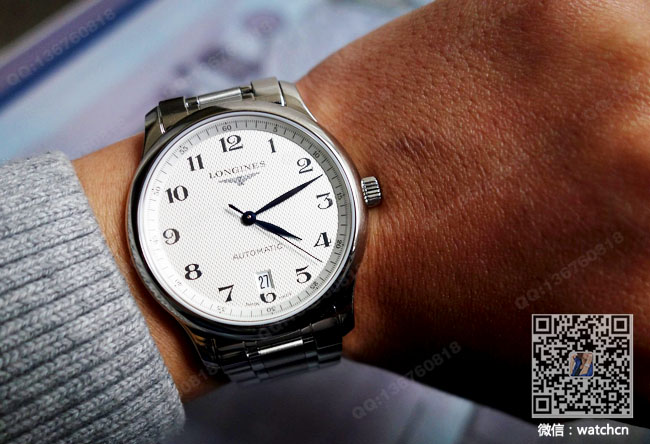
9 Why might a two-handed quartz watch run one minute slow?
The motor in a two-handed quartz watch usually steps once every twelve seconds. If the motor has not stepped yet when setting the time, the minute hand may lag the correct time by one minute. If this happens, simply advance the minute hand by one minute.
10 How do you resolve a magnetised watch?
Once a watch becomes magnetised, its timekeeping will suddenly become inaccurate. Keep mechanical watches away from magnetic fields when wearing them. Magnetisation is quite common nowadays, so there is no need to panic—click here for specific solutions:《How to deal with a magnetised watch》
![[N Factory Perfect Edition] Rolex Submariner series mechanical watch 116613LN](/images/pic/big/3940.jpg)
![[VS Factory Perfect Edition] Panerai Modern LUMINOR 1950 Series PAM00441 Watch](/images/pic/big/3873.jpg)
![[Noob Factory V7 Edition] Rolex Submariner watch 116610LN Black Sub](/images/pic/big/4977.jpg)
![[Noob Factory V7 Version] Rolex Submariner Watch 116610LV Kermit Submariner](/images/pic/big/4976.jpg)