THE JOURNAL
Legendary Watch Archives: Rolex GMT-Master II 16710
In the 50, as the aviation industry flourished and intercontinental travel grew increasingly popular, pilots found a need for a watch that could easily indicate time across multiple time zones. Pan American World Airways consequently made a request to Rolex, and the result wasRolex GMT-Master。
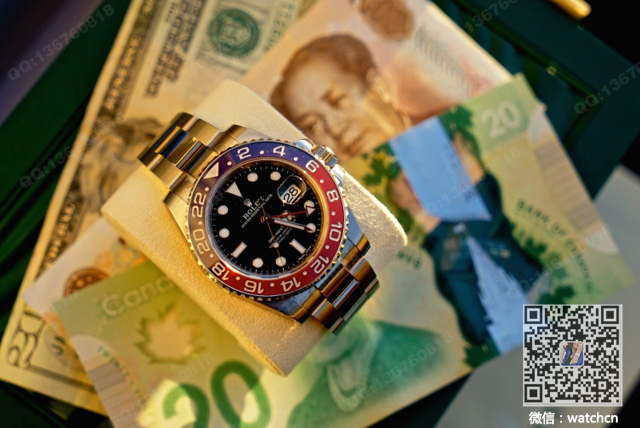
The first-generation GMT-Master was launched in 1954 with reference 6542, and remained in production for 1959 years. The prototype originally featured a Bakelite bezel—which was prone to cracking. Two years later, it was replaced by a more durable aluminium bezel.
The first-generation GMT was produced for a long time starting from 6542, until the second-generation GMT-Master II 16710 was introduced in 1989. 16710 replaced its predecessor 16760. Although the new GMT II shared the same movement as its predecessor, it featured a slimmer design—which was highly sought after by watch enthusiasts at the time.
Bezel
When the Rolex GMT 16710 was released, it was offered with three different bezels: a red and black combination (Coke) bezel, a blue and red (Pepsi) bezel, and an all-black bezel.
We can identify the bezel type by the final character of the reference number. The letter 'A' denotes the Coke bezel, the letter 'B' denotes the Pepsi bezel, and the letter 'N' denotes the all-black bezel, as demonstrated below.
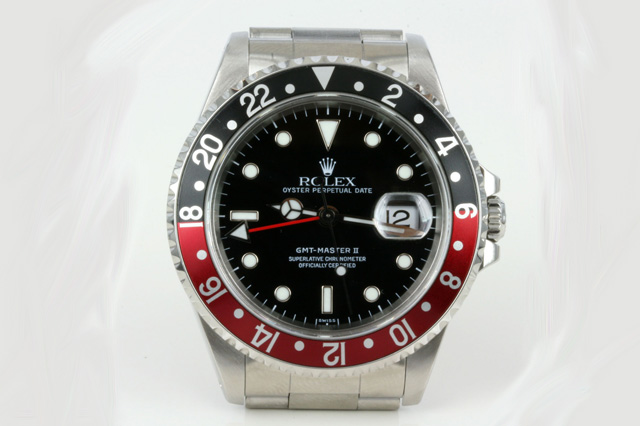
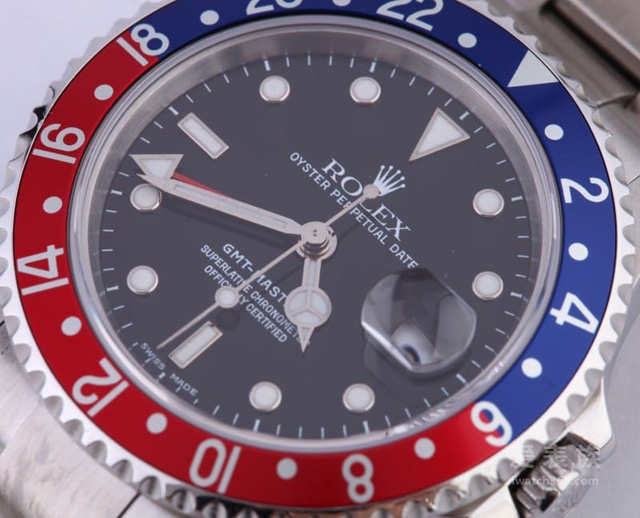
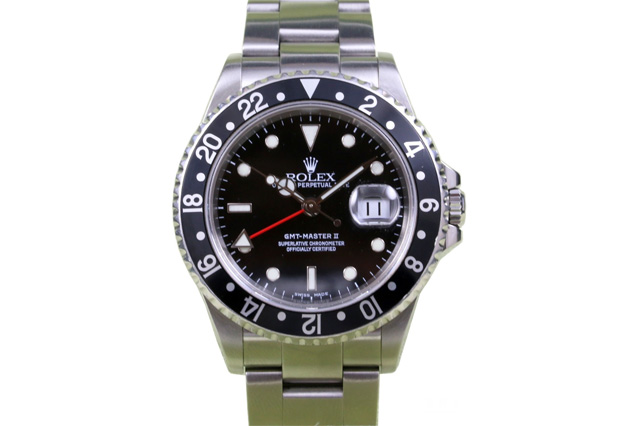
Movement
Rolex movements can be said to rank among the best in the world, and the movement in the GMT II is no exception. The GMT movement is, of course, self-winding, slightly modified from a base automatic movement to add the GMT function. Housed inside the 16710 case is a COSC-certified in-house 3185 movement.
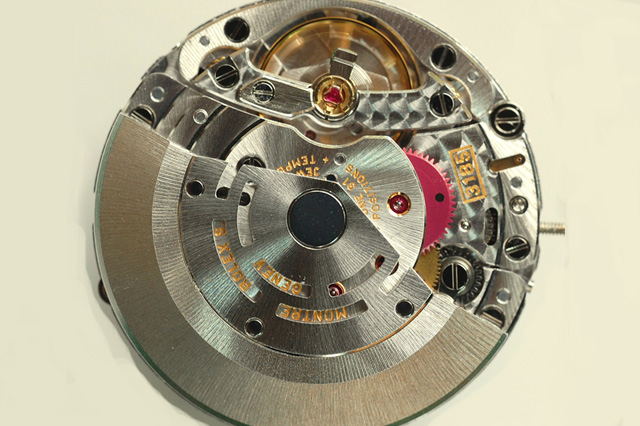
The historical evolution of 16710
Over its long production run, 16710 has undergone several changes. Below is a brief overview of some minor modifications made over time.
1997/2000: Tritium luminescence > Luminova luminescence > Super-Luminova luminescence
2000: The bracelet end links (where they attach to the case) became solid.
2003: Introduction of the laser-etched crown.
2003: Rolex introduces the non-lug hole case (from Y-serial onwards).
2007: Introduction of the new warranty card (plastic/credit card size) (from Z-serial onwards).
End of 2007: Some Z-serial and M-serial GMT-Master II models use the new movement 3186 instead of the older one.
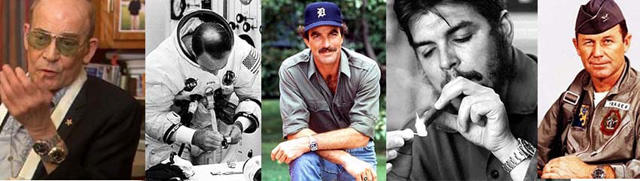
Celebrities who wear the GMT
Many historical figures have been spotted wearing a Rolex GMT. Tom Selleck wore a Pepsi-bezel GMT while playing Magnum P.I.; author Hunter S. Thompson wore two GMTs, one set to Havana time and the other to Moscow time. Che Guevara wore a Pepsi GMT throughout the Cuban Revolution. Jack Swigert wore one during the Apollo 13 mission, and Ed Mitchell wore one during the Apollo 14 moon landing.
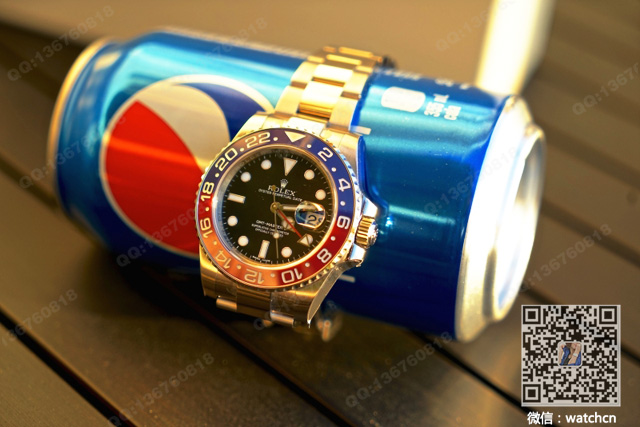
Rolex GMT-Master II automatic mechanical men's watch 116710
Watch Collection: GMT-Master II
Movement Type: automatic mechanical
Case Material: Stainless steel
Bracelet Material: Stainless steel
Case diameter: 40 mm
Price: £2000
Related reading:
Luxury classic: the Rolex Daytona
Why does Rolex not have a tourbillon watch?
Welcome to the Half-Catty Club, the finest big gold watch
Why Famous Watch Brands Like Rolex and Longines Love Sponsoring Tennis Matches
Things you didn't know about Rolex watches
![[N Factory Perfect Edition] Rolex Submariner series mechanical watch 116613LN](/images/pic/big/3940.jpg)
![[VS Factory Perfect Edition] Panerai Modern LUMINOR 1950 Series PAM00441 Watch](/images/pic/big/3873.jpg)
![[Noob Factory V7 Edition] Rolex Submariner watch 116610LN Black Sub](/images/pic/big/4977.jpg)
![[Noob Factory V7 Version] Rolex Submariner Watch 116610LV Kermit Submariner](/images/pic/big/4976.jpg)