THE JOURNAL
The successful launch of Shenzhou eleven: Let's talk about the watches that have been to space
At 7:49 on 10/17, Beijing time, the Shenzhou eleven manned spacecraft, tasked with docking with the Tiangong-two, entered its designated orbit accurately after launching from the Jiuquan Satellite Launch Centre, successfully sending the two astronauts Jing Haipeng and Chen Dong into space.
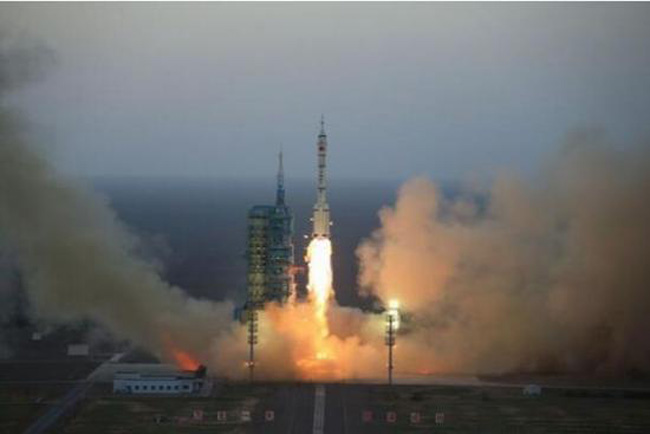
In fact, within the watch world, several timepieces have also ventured into the heavens, accompanying astronauts to witness humanity's step from Earth into space history.
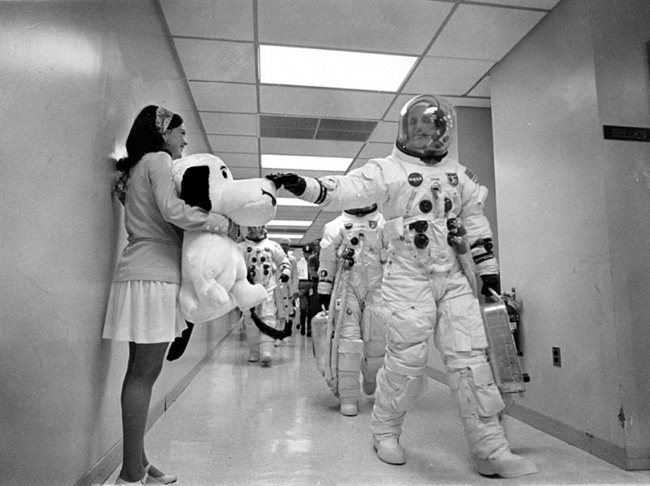
The Apollo lunar landing programme was implemented by NASA in 1961, lasting a total of 12 years until Apollo 17 completed the final moon landing in 1972 12. During the initial space flights, NASA did not stipulate that astronauts had to wear watches. However, NASA realised that astronauts needed a highly reliable timepiece in the harsh environment of outer space to ensure the precision of various important operations. From 1962 to 1964, after rigorous screening, only Longines 13ZN, the Rolex Daytona,and the Omega Speedmasterremained. These 3 major brands were subjected by NASA to simulated outer space environments for a final round of extremely rigorous testing. The specific tests roughly included: high temperature, low temperature, thermal shock, humidity, high oxygen, impact, acceleration, low pressure, high pressure, vibration, and noise, with a total testing time of as much as 380 hours. Ultimately, the Speedmaster triumphed through every hurdle and stood out. It is reported that the Rolex was eliminated due to a deformed second hand causing it to stop, while the Longines suffered from a distorted and detached crystal. On 1965 3 1, NASA officially announced the Speedmaster as the only qualified watch required for all manned space missions.
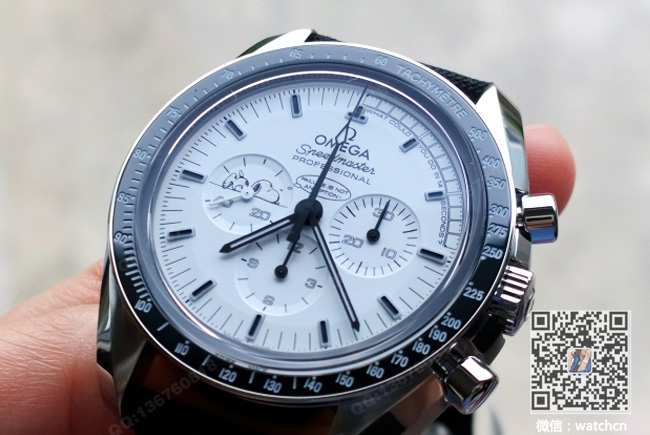
Omega Speedmaster Professional 311.32.42.30.04.003 Snoopy Special Edition
Among the Speedmaster's many achievements, one is particularly famous. In 1970 4, Apollo 13 was humanity's third attempted lunar landing mission, but an explosion in the oxygen tank forced the spacecraft's flight plan to be aborted, leaving the astronauts to orbit the moon in order to position the spacecraft onto a free-return trajectory that would bring them back to Earth. To conserve the fuel required for the return journey, all electricity in the spacecraft was completely shut off except for the life support system, making the Omega Speedmaster the only timing instrument on board that remained operational. The astronauts had to rely on it to perform two crucial actions: first, to time the engine burn to shorten the return journey to Earth; second, to time the engine burn to reduce speed and steepen the re-entry flight angle into Earth's atmosphere. The second action was particularly critical to life and death; if the timing was mistimed, the spacecraft would enter the atmosphere at the wrong angle, rendering the astronauts' safety uncertain, making timekeeping extremely vital. Finally, at the critical moment to decide a safe return: Apollo 13 had to precisely calculate 14 seconds of engine ignition time to correctly break free from lunar orbit and enter Earth orbit for the return. At this moment, astronauts Jim Lovell and Jack Swigert calmly accomplished this task with the Speedmasters on their wrists, helping Apollo 13 return safely; the Speedmaster saved the astronauts' lives. Afterwards, the three astronauts jointly signed the Snoopy Award presented by Omega by NASA.
![[N Factory Perfect Edition] Rolex Submariner series mechanical watch 116613LN](/images/pic/big/3940.jpg)
![[VS Factory Perfect Edition] Panerai Modern LUMINOR 1950 Series PAM00441 Watch](/images/pic/big/3873.jpg)
![[Noob Factory V7 Edition] Rolex Submariner watch 116610LN Black Sub](/images/pic/big/4977.jpg)
![[Noob Factory V7 Version] Rolex Submariner Watch 116610LV Kermit Submariner](/images/pic/big/4976.jpg)