THE JOURNAL
What is a perpetual calendar watch? Can a perpetual calendar watch really run for ten thousand years?
Day after day, month after month, year after year—no one can change the passage of time. However,perpetual calendar watchis able to record the accurate date, day, month, and even the phases of the moon. For this reason, many discerning gentlemen prefer the complex perpetual calendar function over simpler watches; both the exterior and the movement itself are truly breathtaking. But can a perpetual calendar watch really run for ten thousand years?
What is a perpetual calendar?
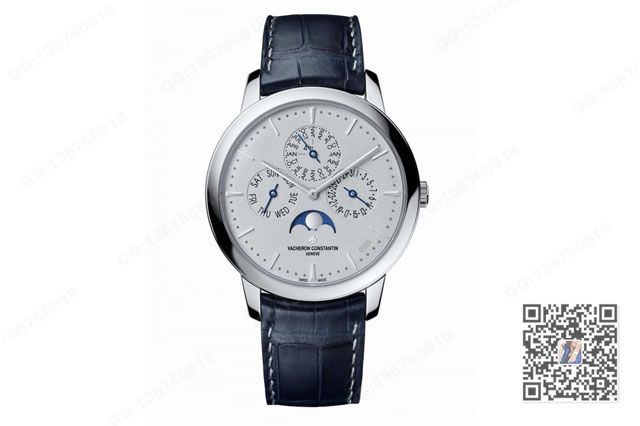
The perpetual calendar is a complex complication in watchmaking. It can display the leap year, month, moon phase, day of the week, and date via hands or small windows, and it automatically adjusts for months of different lengths. In 1764, British watchmaker Thomas Mudge created a pocket watch with this function, and the first perpetual calendar wristwatch appeared in 1925. Today, top-tier watch manufacturers all produce perpetual calendar watches. The movement of a perpetual calendar watch features a complex gear mechanism that, through its transmission, automatically adjusts the date for long and short months, and even automatically adjusts during the leap year month of 2 (jumping from the 2 of 29 to the 3 of 1).
Why is the "perpetual calendar" considered an ultra-complex complication?
For a digital watch, achieving a perpetual calendar is easy; a watchmaker can simply write the calendar into a program and input it into the watch's chip. When a special year arrives, the program automatically triggers the timer to make the correction. However, for a mechanical watch, there is no compiler to store the calendar, so the master watchmaker must use precision gears to "remember" the special years within a 100-year cycle. The movement contains a complex gear mechanism that automatically adjusts the date for long and short months. This micro-gear, which completes one rotation every 4 years, ensures the watch can automatically adjust even in the leap year month of 2—jumping from the 2 of 29 to the 3 of 1.
My perpetual calendar has stopped; what should I do?

The perpetual calendar function is extremely complex, and maintaining it is quite troublesome—almost masochistic. Of course, you may never live to see the adjustment required once every 100 or 400 years.
Because the mechanical structure of a perpetual calendar has a specific sequence, adjusting it after it has stopped is quite complex. Traditional perpetual calendar watches are adjusted using various pushers located on the side of the case, which require special tools. If you find this troublesome, you can take it to a watch shop for adjustment. However, a true watch enthusiast would never let a perpetual calendar watch stop; if they are not wearing it for a long time, they will keep it in an automatic watch winder.
Related reading:
Only these complex "movements" deserve to be called watches
An extremely complex and impressive watch complication—the perpetual calendar
![[N Factory Perfect Edition] Rolex Submariner series mechanical watch 116613LN](/images/pic/big/3940.jpg)
![[VS Factory Perfect Edition] Panerai Modern LUMINOR 1950 Series PAM00441 Watch](/images/pic/big/3873.jpg)
![[Noob Factory V7 Edition] Rolex Submariner watch 116610LN Black Sub](/images/pic/big/4977.jpg)
![[Noob Factory V7 Version] Rolex Submariner Watch 116610LV Kermit Submariner](/images/pic/big/4976.jpg)