THE JOURNAL
Insight: Do Replica Watch Luminescence Materials Emit Radiation?
Light and dark have always mutually opposed one another, with darkness being the grave of light, until the advent of luminescence—a substance capable of glowing in the endless dark, giving the night a different kind of radiance.

This magical material brings light into the dark to help people tell the time.Replica watchesWith luminescent hands and dials, people can read the current time easily and accurately. In eras without luminescence, telling the time at night meant first lighting an oil lamp, while wealthy nobles and royalty relied on minute repeaters to tell the time by sound.
Luminescence is so magical and mysterious that rumours circulate online claiming luminous watches are radioactive, affecting human safety when worn, with some even saying luminescence can be fatal. So, do watch luminescent materials actually emit radiation? Can they be fatal?
The earliest luminescent material used was zinc sulphide. Zinc sulphide does not glow on its own; it merely possesses phosphorescent properties, meaning it becomes excited after exposure to sunlight or artificial light and continues to emit light for a certain period. However, zinc sulphide fades rapidly and loses its glow in the dark shortly after. This type of zinc sulphide is non-radioactive.

In 1898, Marie Curie discovered the radioactive element radium. People at the time found that mixing radium with zinc sulphide caused the zinc sulphide to glow autonomously without needing excitation from sunlight or artificial light. Consequently, this revolutionary luminescent material began to spread rapidly. From the 1930s onwards, almost all watch luminescence utilised this material. Using radium as a luminescent material was undeniably harmful to the human body. Early watchmakers applied luminous treatment to dials using fine brushes without any protection, leading to occupational illnesses.
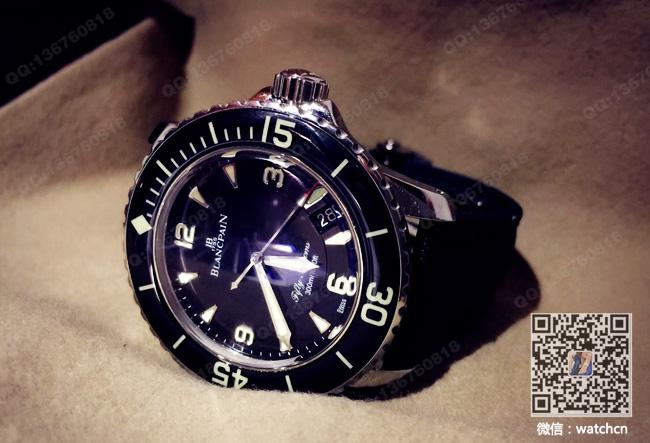
The famousBlancpain Fifty Fathomsvintage dive watch radium luminescence has endured for decades, and testing with a radiation meter today shows radiation levels off the chart. The US military even engraved 'Radioactive Material, Return to Nearest Military Base' on the casebacks of 50 submersibles. Because of radium's radioactivity, its use as a luminescent material was gradually abandoned. Until the early 70s, radium luminous compounds were still widely used in industries such as watchmaking and aviation instruments. This is the origin of the radiation associated with watch luminescence.
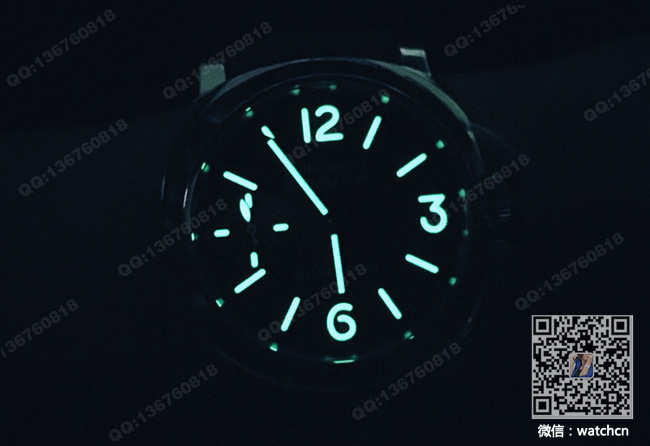
In 1949, Panerai patented its Luminor luminous technology, which began utilising tritium—another radioactive element. Although less harmful to the human body than radium, wearing the watch still exposes the wearer to extremely minute levels of radiation. Removing the watch eliminates direct radiation entirely. This is the root cause behind the enduring advice to 'take off your luminous watch when sleeping at night'. Tritium luminescence was used from the 50s to the 90s.
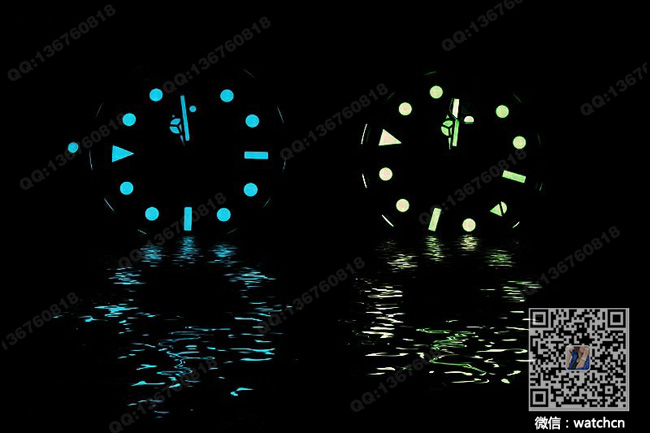
Rolex watchesalso made extensive use of tritium luminescence. Vintage Rolex watches produced between 1960 and 1998 display inscriptions such as 'Swiss-T<25' or 'T Swiss T', where the 'T' denotes the radioactive element tritium.
Today, certain brands such as Ball continue to use gas tubes containing tritium. These glass tubes feature a thin layer of zinc sulphide coated on the inner walls and are filled with tritium gas. The tritium gas inside continuously excites the zinc sulphide, providing luminescence that can last for 20 years. Furthermore, higher gas pressure inside the glass tubes results in brighter illumination. Of course, this technology also involves radiation, but 'discussing toxicity without mentioning dosage is absurd'. In practice, using tritium as an excitation element results in extremely negligible radiation—effectively zero. Its emissions struggle to penetrate even sapphire crystals, and even if a tritium gas tube were to rupture, the potential harm from any leaked tritium would be negligible.
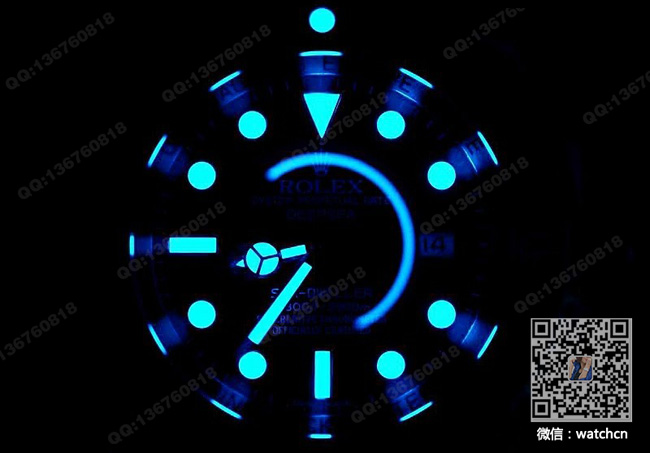
Although tritium luminescence involves only trace amounts of radiation, it still cannot be classified as entirely safe. With technological advancements, modern watches have adopted a brand new luminescent material called 'Super-LumiNova', which is non-radioactive and non-toxic, composed of strontium aluminate and rare earth compounds. Japan's Nemoto & Co. Ltd. holds the patent for Super-LumiNova, having invented it in 1993, and established a joint venture, LumiNova AG Switzerland, alongside Switzerland's RC TRITEC Ltd. to supply this premium luminous material globally. Super-LumiNova is not only non-radioactive and non-toxic, but its luminous performance is also outstanding. During the initial glow phase, its intensity can surpass tritium gas tubes and even exceed traditional zinc sulphide by a factor of a hundred. Moreover, it does not degrade over time like radioactive materials. However, this luminescent material must not get wet, as moisture diminishes its brightness; consequently, some brands encase Super-LumiNova powder in transparent plastic for protection.
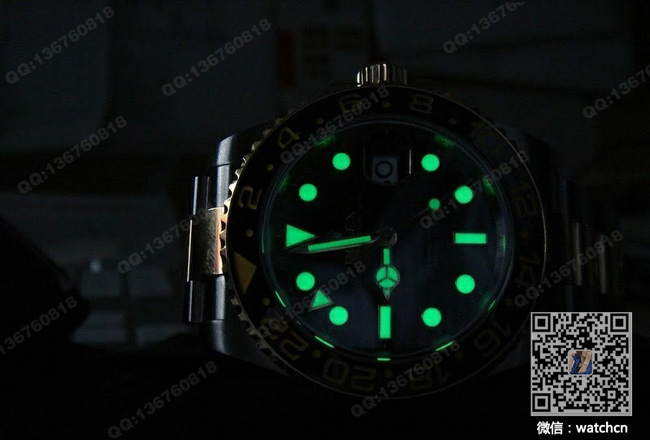
For avid watch enthusiasts, however, this is not entirely good news. Super-LumiNova is so chemically stable that we are unlikely to see the aged, patinated yellow radium-style dials caused by radioactive decay in the future.
![[N Factory Perfect Edition] Rolex Submariner series mechanical watch 116613LN](/images/pic/big/3940.jpg)
![[VS Factory Perfect Edition] Panerai Modern LUMINOR 1950 Series PAM00441 Watch](/images/pic/big/3873.jpg)
![[Noob Factory V7 Edition] Rolex Submariner watch 116610LN Black Sub](/images/pic/big/4977.jpg)
![[Noob Factory V7 Version] Rolex Submariner Watch 116610LV Kermit Submariner](/images/pic/big/4976.jpg)