THE JOURNAL
Richemont Group, led by Cartier, carries out massive layoffs to reverse slump in performance
Plagued by a sharp decline in performance, owningVacheron Constantin, Cartier, Montblanc and other brands, Richemont Group has recently suffered from frequent senior management changes and massive layoffs. At the end of 11, Richemont announced plans to launch a major layoff of 200-250 positions for the Vacheron Constantin and Piaget brands, which subsequently led to employee protests. In fact, as early as 5 this year, in order to rescue its continuously falling performance, Richemont had previously cut 300 positions across its three watch brands: Cartier, Piaget, and Vacheron Constantin. According to the latest financial report released by Richemont, for the first 6 months ended 30 9, the group's profit was 5.4 billion euros, a year-on-year plunge of 51%; sales reached 50.9 billion euros, a drop of 12.6%. Among themCartierHigh-end watch sales in mainland China fell by about sixty per cent, subsequently triggering upper management turbulence within the Richemont Group.
Multi-brand large-scale layoffs
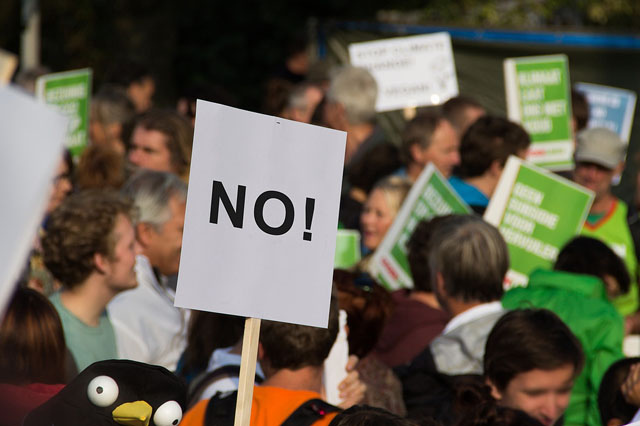
Dissatisfied with the massive layoff plan, 150 employees of the Richemont Group recently launched a protest near the headquarters of the Vacheron Constantin and Piaget brands. On 14 11, Richemont, owner of luxury brands such as Piaget, IWC, Vacheron Constantin, and Cartier, stated it would cut about 250 positions in Switzerland. Piaget and Vacheron Constantin will be the most affected by these layoffs. According to the latest news from Reuters, the union and Richemont reached a final agreement, and the number of positions cut will be "significantly reduced" compared to the original plan, though specific figures were not disclosed.
In the first half of this year, Richemont carried out a large-scale round of layoffs. The group scaled back its original plan of laying off 300 people to 100 people, with Cartier bearing the heaviest cuts at a total of 70 positions, while the remaining 30 positions were cut across Piaget and Vacheron Constantin. Additionally, some position reductions were achieved through early retirement, voluntary resignation, and internal transfers. Relevant data shows that in 2016, Richemont will reduce more than 500 positions, accounting for approximately 5.9% of its total 8500 employees in Switzerland.
It is reported that, in addition to grassroots layoffs to reduce expenses, Richemont's upper management has also experienced turbulence. According to reports, the group's chief financial officer and chief executive officer will retire in 2017. Recently, the group announced that the chief executive officer of Montblanc will transition to head of group operations on 1 4 2017. Furthermore, due to Cartier's consecutive years of declining performance, senior executives have departed successively. Last year, Cartier's chief executive officer, international retail director, and other executives successively jumped ship to other luxury companies, triggering a series of personnel replacements in Cartier's upper management.
Recently, Richemont stated that after restructuring its executive management hierarchy, the position of chief executive officer will be abolished. Majority shareholder Johann Rupert will serve as executive chairman, and the leaders of individual brands and departments will report directly to the board of directors, thereby strengthening the group's ability to respond to market changes.
Struggling to reverse persistently sluggish performance
Continuously falling performance is the culprit behind Richemont's endless layoffs. Due to a sluggish global economy, particularly the contraction of the watch and jewellery markets in China and the US, as well as the impact of terrorist attacks on European tourism spending, Richemont's core businesses of watches and jewellery have been severely hit.
According to the financial report released by Richemont in 11, for the first 6 months ended 30 9, Richemont's profit stood at 5.4 billion euros, a year-on-year plunge of 51%, while its sales also plummeted to 50.9 billion euros, representing a decrease of 12.6%. Among them, sales of luxury watches from brands including Vacheron Constantin, IWC, Panerai, and Piaget plunged by 17% in the first half of the year, whilst sales of watch products from the group's jewellery brands fell by 13%.
In 9, when issuing a profit warning, Richemont stated that the group's profit dropped by 45% in the first half of this year, with Cartier performing particularly poorly. In fact, since 2014, Cartier's performance has slowed down; from 2015 onwards, Cartier's declining performance began to drag down the group's development. At the beginning of 2015, the third-quarter financial report for the 2014 financial year released by Richemont showed that, affected by the performance of the group's core Cartier watch division, the group's third-quarter sales growth was sluggish, marking its worst performance in six years. By the end of 2015, compared to its peak performance level in 2012, Cartier's high-end watch sales in mainland China had dropped by about sixty per cent.
Data from the Fortune Character Research Institute shows that Richemont's sales in 2015 were 104.1 billion euros, with a growth rate of 4%, an increase of 5 percentage points compared to 2014. In 2015, Richemont reached its highest profit value at 26.7 billion euros. However, due to sluggish sales in the Hong Kong and Macau regions and a severe decline in the watch category, sales in 2015 were only 41 billion euros. Notably, Richemont's profit growth rate has been on a downward trend since 2011, falling from 80% to 10% in 2015.
Frequent actions still fail to rescue the company
To promote its development in the Chinese market, Richemont has made many moves on the mainland this year. In 7, Cartier released an advertising film shot by rising star Lu Han and announced him as its brand friend. In 12, Richemont watch brand Jaeger-LeCoultre published a collaborative advertisement with internet celebrity Papi Jiang. However, this seemingly did not bring a positive impact to Richemont, and the collaboration with Papi Jiang instead sparked widespread criticism of Jaeger-LeCoultre's decision-making.
Previously, Cartier's partner was Andy Lau, while Jaeger-LeCoultre's brand friend was Zhao Wei. Industry insiders say that Richemont Group's collaboration with celebrities this time is quite different from the past; it can be said that Lu Han and Papi Jiang do not align with the consistent brand positioning of the two brands. The brand's intention to get closer to young Chinese consumers is obvious, but its product positioning and pricing do not match the young demographic driven by Lu Han and Papi Jiang.
Zhou Ting, Dean of the Fortune Character Institute, believes that Richemont Group is currently undergoing a process of self-revolution. She suggests that the group should strengthen its practical control over its brands and enhance unified management from headquarters to regional levels, particularly regarding markets and channels. She recommends implementing a comprehensive e-commerce strategy for retail channels, strengthening online service capabilities, and collaborating with third-party platforms that possess high-quality customer bases. Furthermore, she advises moving away from intermediary media promotion, breaking the tradition of relying on PR firms for market communication, and engaging in direct, precise marketing to end consumers. Additionally, Zhou Ting stated that Richemont Group should establish a global service system.
Related reading:
Sharp decline in French tourists leaves Swiss watches caught in the crossfire
![[N Factory Perfect Edition] Rolex Submariner series mechanical watch 116613LN](/images/pic/big/3940.jpg)
![[VS Factory Perfect Edition] Panerai Modern LUMINOR 1950 Series PAM00441 Watch](/images/pic/big/3873.jpg)
![[Noob Factory V7 Edition] Rolex Submariner watch 116610LN Black Sub](/images/pic/big/4977.jpg)
![[Noob Factory V7 Version] Rolex Submariner Watch 116610LV Kermit Submariner](/images/pic/big/4976.jpg)