THE JOURNAL
Which mechanical watch is better: manual-winding or automatic-winding?
Mr Li, who had just turned thirty, was preparing to buy his first mechanical watch. In his memory, his father had a watch when he was a childMechanical watch. The first thing his father did every morning after waking up was wind the watch. The ticking sound accompanied Mr Li through a happy childhood.

Therefore, in his view, a mechanical watch ought to be manually wound. But when he browsed around a shopping mall, he found that most watches nowadays are automatically wound, which left Mr Li a little confused, feeling as though his happy childhood memories had seemingly vanished in an instant
So, when faced with automatic-winding and manual-winding mechanical watches, how exactly should we choose?
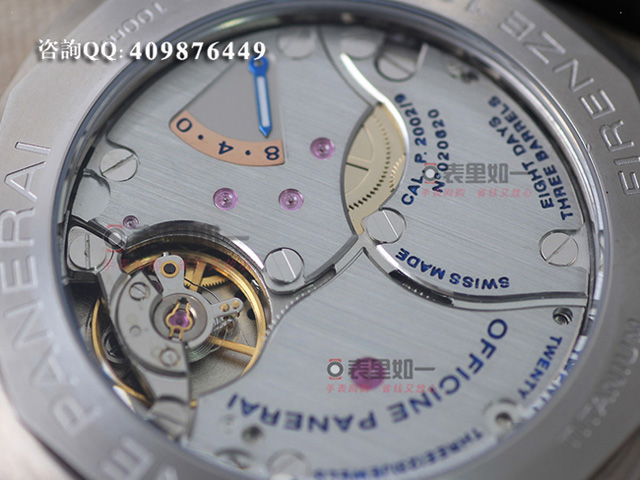
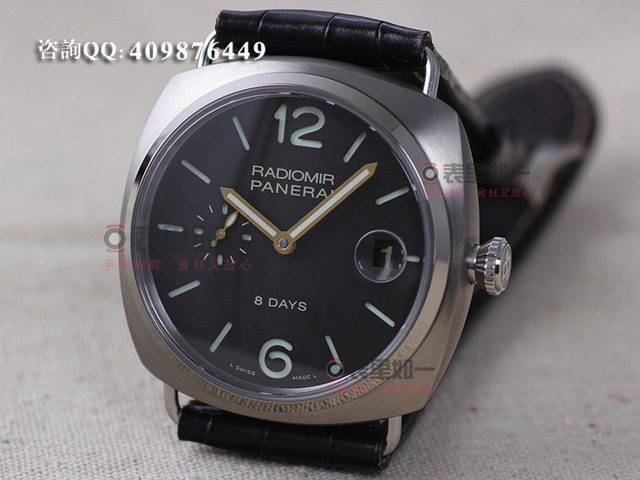
Panerai Radiomir series 8Days manual-winding mechanical watch PAM00346, titanium brushed case, fitted with a P.2002 hand-wound mechanical movement
First, let us look at the differences between the two. The main point of distinction lies in the presence or absence of a rotor. An automatic-winding watch typically features a semi-circular, rotatable weight inside the movement.
An automatic-winding watch uses the rotation of the rotor to drive gears and levers to wind the mainspring. As long as you wear the watch, the movement of your arm causes the rotor to spin and wind the mainspring, accomplishing this imperceptibly. Therefore, so-called automatic winding still requires the involvement of your hand, only without needing to manually turn the crown deliberately.
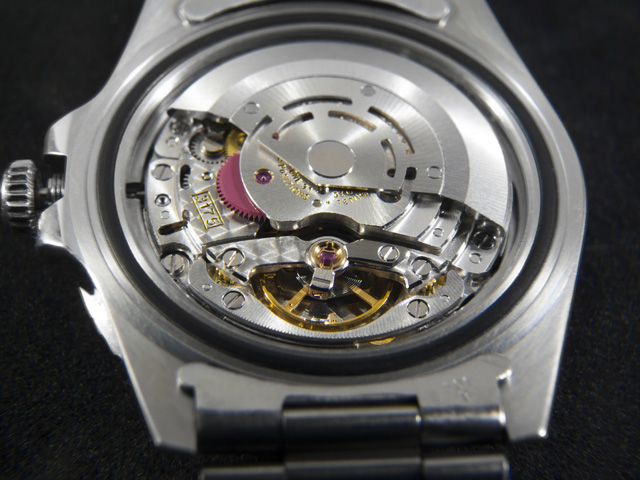
A manual-winding watch is the kind of watch his father used that Mr Li saw in his childhood. It has no rotor and requires you to frequently turn the crown by hand to wind the mainspring.Compared to decades ago, many manual-winding watches nowadays are long-power-reserve models. This means you do not have to wind the watch every day; winding it every few days suffices.
However, when winding the watch, you must be particularly careful, because manual-winding mechanical watches usually do not have a slipping bridle, and once over-wound or forced too hard, the mainspring might snap. Therefore, when winding, if you clearly feel strong resistance, you do not need to wind any further, as the watch is fully powered at that point. After winding a few times, you will be able to figure out how many turns your watch needs.
Clearly, automatic watches are much more convenient to wear, saving you the hassle of frequent winding, and they make it easier to keep time accurately. As long as you are wearing the watch, it receives a continuous supply of power. With manual-wind watches, however, the power reserve gradually decreases, and if you fail to wind them in time, the timekeeping may become less precise. Of course, when using an automatic watch for the first time after a long period of inactivity, it must also be fully wound by hand to ensure precise operation.
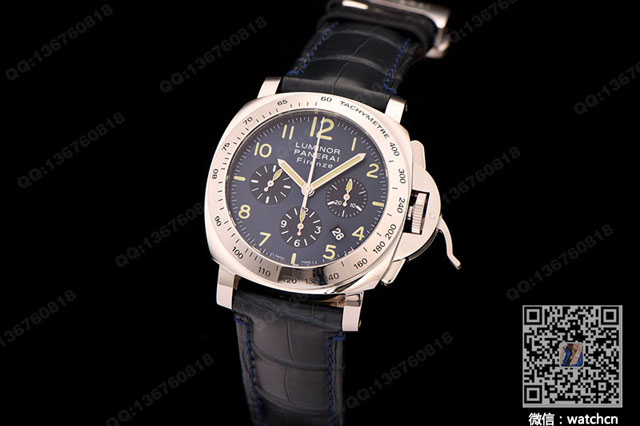
Panerai Luminor automatic mechanical watch PAM00224, custom OP III automatic mechanical movement, 44mm case diameter, 100 metres water resistance
From the perspective of appreciating the movement, manual-wind watches come out on top. Because automatic watch movements feature a rotor, admiring the movement always feels a little obstructed. Without a rotor blocking the view, the exquisite elegance of a manual-wind movement is laid entirely bare before your eyes, seemingly teasing your senses at every moment. At the same time, the distinct sound of manual winding is something many seasoned watch enthusiasts are fascinated by.
The process of winding a watch is a form of interaction between wearer and timepiece. As you wind it, the seconds hand moves slowly and the balance wheel begins to "dance," instantly breathing life into the watch. This feeling is also a delightful experience.
Therefore, it is hard to say whether automatic or manual-wind watches are definitively better; it mainly depends on your personal requirements.
Related reading:
Why can't mechanical watches withstand drops?
Mechanical watches free from radio interference
A watch enthusiast's favourite: manual-winding mechanical watches
What is the purpose of the timing bezel on a diving watch? How do you read the timing bezel?
Demystifying how watches work: why does the second hand of a quartz watch tick in steps?
![[N Factory Perfect Edition] Rolex Submariner series mechanical watch 116613LN](/images/pic/big/3940.jpg)
![[VS Factory Perfect Edition] Panerai Modern LUMINOR 1950 Series PAM00441 Watch](/images/pic/big/3873.jpg)
![[Noob Factory V7 Edition] Rolex Submariner watch 116610LN Black Sub](/images/pic/big/4977.jpg)
![[Noob Factory V7 Version] Rolex Submariner Watch 116610LV Kermit Submariner](/images/pic/big/4976.jpg)