THE JOURNAL
Patek Philippe: Introduction to the World's Most Expensive Watch
The most expensive watch in the world, the Henry Graves pocket watch, originates from the 1930sPatek Philippemanufacture, fetching an auction price of 1100 US dollars, entirely cementing a astronomical myth.
Switzerland is a glittering kingdom of horology, and Patek Philippe is its brightest star. Combining advanced technology, product aesthetics and individuality, it is hailed as the king of watches. Yet in terms of history, Patek Philippe, founded in 1837, falls well behind Blancpain (1735), Vacheron Constantin (1755) and Perrelet (1777); in terms of sales volume, Patek Philippe loses to fashion favourites Timex and Seiko; in terms of being ostentatious, Patek Philippe is even lower-key than Rolex, with its brand logo rarely appearing on the dial. So wherein lies the prestige of Patek Philippe? How can such a brand with seemingly lacking advantages continue to lead the watchmaking world alone, standing proudly at the summit of kingship undefeated for a century?
Why Patek Philippe watches are expensive
1. Origins of the enterprise
To fully appreciate the charm of Patek Philippe, one must trace back to mid-16-century Switzerland. At that time, the watchmaking industry was in its infancy. Within just a few decades, it took scale and became renowned worldwide for exceptional quality. Early watchmakers were not only artisans, but also harboured an almost zealous passion, pursuing perfection in both form and performance, coalescing into a watchmaking ethos dedicated to perfection that has been passed down through generations. It was upon three centuries of technical accumulation and cultural heritage that Patek Philippe was born. In 1838, its initial name was Patek, Czapek & Co, founded by pioneers Antoni Patek and Franciszek Czapek.
Antoni Patek was born in 1812 in Piaski, a small village in Poland. Intelligent from a young age, by his teens he had already mastered five languages and possessed considerable artistic talent. Due to the turbulent situation in Poland, he travelled via Paris, fleeing to Geneva in Switzerland, where he studied under the famous Swiss landscape painter Alexandre Calame. While learning to paint, he perceived the limitless future of the watchmaking industry, so he purchased high-quality movements to assemble himself and sold them to Poles. At only 19 years of age, he already displayed astute business acumen. As his business grew day by day, he decided to establish his own watch company, determined to craft the finest timepieces for the world. He invited Franciszek Czapek, a fellow Polish watchmaker, to join his entrepreneurial venture. Patek managed the business side, while Czapek was responsible for production. Initially, they had only one or two employees, with Czapek personally producing the precision movements. Their earliest clients were mostly Polish. With local watch manufacturers densely clustered, competition was extremely fierce. Without the support of the Polish community, Patek might not have survived the difficulties. Patek insisted on prioritising quality over quantity, producing only 200 watches a year while striving relentlessly for innovation.
However, the path of entrepreneurship was fraught with hardship, and at one point there was only a cash balance of 1 francs and 86 centimes. Furthermore, the relationship between the two partners gradually fractured. "Czapek was an excellent watchmaker, but he was content with mediocrity and lacked a spirit of innovation. He fell into an indolent lifestyle and was indifferent to the business of the workshop." With difficulties arising, change was inevitable. In 1844, Patek took his products to the Paris Exposition, where he met watchmaker Adrien Philippe. Philippe had invented keyless winding technology, winning a gold medal, making him the biggest winner at that exhibition. After carefully studying Philippe's invention, Patek sniffed out a business opportunity. Since both shared sharp commercial instincts, the idea of cooperation sparked immediately. A year later, Czapek withdrew his shares to set up on his own, and Philippe and Patek began joining forces. In 1851, the company was officially renamed Patek Philippe & Co. Philippe was highly innovative, possessed exquisite craftsmanship, and could be called a master watchmaker. He believed in the philosophy of "manufacturing precision machinery", and the pocket watches he made far surpassed other brands.
In the same year, good fortune arrived unexpectedly. Queen Victoria visited the inaugural London watch exhibition and was captivated by a Patek Philippe watch. This watch featured a keyless winding design, measured no more than 30 millimetres in diameter, and was both exquisite and novel. The Queen purchased it on the spot. Inspired by her, Prince Albert also bought a Patek Philippe watch. The news spread rapidly, and Patek and Philippe became the focus of everyone's attention.
Soon, their company joined the ranks of renowned watchmakers, earning a global reputation.
Following this, the iceberg of funding melted away. Patek began vigorously promoting products and expanding markets, even developing business as far as Russia (Poland's historic adversary). Soon, Patek Philippe became a supplier to famous retailers such as Rodanet in Paris, Pena in Madrid, and Elimayer in Leipzig. Patek was shrewd with strong marketing capabilities; Philippe was technically brilliant and full of creative inspiration. They championed invention and creation, securing numerous patents, such as crown winding and setting equipment, and won the Swiss Observatory's first precision award.
2. The philosophy of fine craftsmanship
For over a century, Patek Philippe has adhered to the philosophy of fine craftsmanship, following the production principle of prioritising quality over quantity and meticulous, unhurried work. There is only one core objective: the pursuit of perfection. It practises limited production, with current annual output numbering no more than 2.5 to 3 thousand. Over the course of 165 years, the number of watches produced by Patek Philippe has been extremely limited, failing to match the annual output of a single fashion watch, and they are sold exclusively in the world's top boutiques.
It takes at least five years for a watch to go from design to production: 4 years of research and design, 9 months of production (much like carrying a baby), and 3 months of assembly and quality control. If it is a bespoke piece, the research and development time is even longer. That watch with a sky-high price of 1100 million US dollars was custom-made by Patek Philippe 1933 years ago for an American banker, capable of displaying 24 different pieces of information: month, date, sunset and sunrise times, and even a chart of the stars and moon phases for any night in New York City. Patek Philippe watchmakers never skimp on the time they dedicate to a timepiece. This watch took 3 years to design and 5 years to manufacture. A total of 8 years for just one watch. What a commitment to craftsmanship!
Patek Philippe has always maintained the tradition of hand-crafting only one watch a year. To own this watch, one can only patiently wait 8 to 10 years, and it comes at a high price, around 3000 RMB, but it is well worth it. In the pursuit of perfection, aesthetic beauty is everywhere, even beneath the unseen case. Hand-polished joints, bevels, and the beautiful Geneva stripes on the movement are all minute details, yet they are meticulously carved and polished.
Complications represent the pinnacle of watchmaking, and Patek Philippe reveres this union of perfect complexity and perfect precision. The prestige of Patek Philippe lies not only in its elegant exterior but also in the extreme precision and complexity of its internal mechanics. 'Configuring the most complex watch within the most minimalist exterior' has always been a guiding principle for Patek Philippe. Patek Philippe watches manufactured in the nineteenth century remain astonishingly accurate, despite their wheel axles having rotated on their bearings over 120 billion times.
Having read this, I would like to recommend a popular, best-selling Patek Philippe watch. For further enquiries, please add me on WeChat.
Patek Philippe 5711 Series Automatic Mechanical Watch Model: 5711G
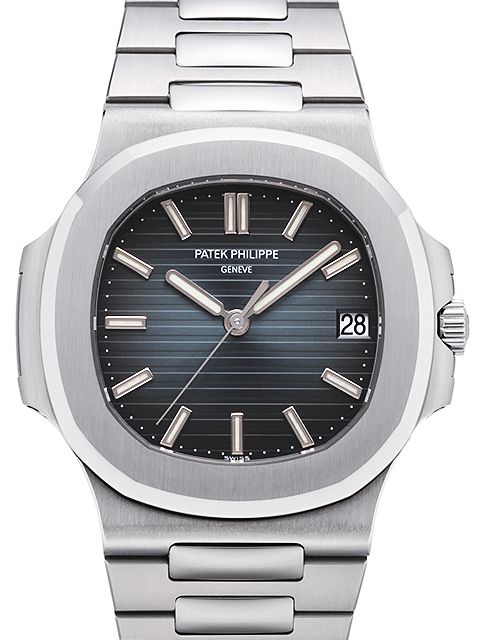
Review:
◆ Distinctive and showcasing vitality and substance.
◆ Silver sweep seconds hand, with a square date window at the three o'clock position.
◆ Octagonal case, sapphire crystal, visually appealing and durable.
◆ Replica ETA2824 movement and Swiss ETA2824 movement available to choose from, ensuring accurate timekeeping.
Summary: Patek Philippe watches combine unparalleled precision with unique design, creating exemplary pieces that represent the pinnacle of high watchmaking art. The Patek Philippe watches recommended here are finely crafted with guaranteed quality. For those interested in purchasing, please add me on WeChat for consultation.
You might also like:
Endless Battle: Patek Philippe and Vacheron Constantin
Battle of the Watches: Vacheron Constantin and Patek Philippe
Case Comparison: Patek Philippe vs Vacheron Constantin
Ultimate Showdown: Patek Philippe vs Vacheron Constantin
How to tell if a Patek Philippe watch is genuine?
![[N Factory Perfect Edition] Rolex Submariner series mechanical watch 116613LN](/images/pic/big/3940.jpg)
![[VS Factory Perfect Edition] Panerai Modern LUMINOR 1950 Series PAM00441 Watch](/images/pic/big/3873.jpg)
![[Noob Factory V7 Edition] Rolex Submariner watch 116610LN Black Sub](/images/pic/big/4977.jpg)
![[Noob Factory V7 Version] Rolex Submariner Watch 116610LV Kermit Submariner](/images/pic/big/4976.jpg)